
Claude Sonnet 5.5: Speed, Cost & Performance

Nov 6, 202613 min read
Claude Sonnet 5.5 redefines the value proposition of mid-range AI. By delivering reasoning capabilities that match or exceed previous flagship models, it retains the high-velocity execution you'll need for production environments.
Claude Sonnet 5.5 is Anthropic's Sonnet-class model designed for well-scoped everyday work.
**The moment a integration is connected in Activepieces, an agent can call it. Registering a integration once allows it to run as a step inside a flow and as a tool schema on a per-project MCP server, reachable from Claude or Cursor.
This unified catalog, used by teams at MoneyGram and Alan, ensures that a tool integrated for automation is immediately available to agents without a second migration or manual export step.**
Redefine mid-tier performance with Claude Sonnet 5.5
Claude Sonnet 5.5 release timeline and availability
Currently, Claude Sonnet 5.5 is my primary recommendation for production-grade automation.
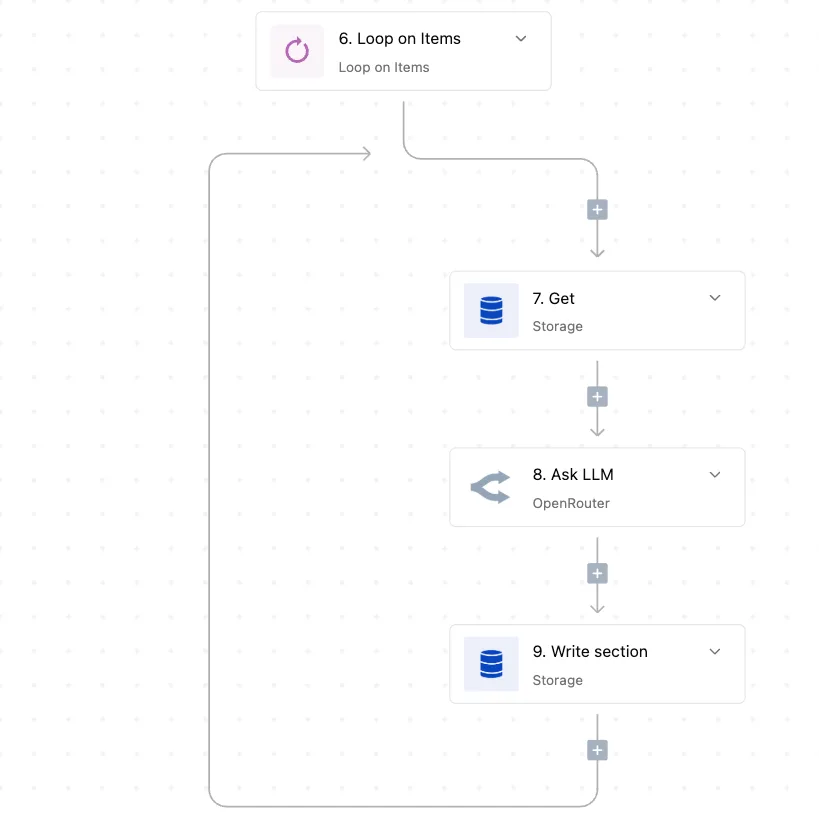
While Opus 5.5 remains the specialized choice for long-horizon agentic work, Openrouter reports that Sonnet has become the operational default. It handles complex instruction following well, though responses can in practice take longer per task.
| Model Tier | Primary Use Case | Reasoning Level | Speed Profile |
|---|---|---|---|
| Claude Haiku 5.5 | High-volume classification and simple extraction | Near-frontier | Instantaneous |
| Claude Sonnet 5.5 | General-purpose automation and complex tool use | — | — |
| Claude Opus 5.5 | Multi-step research and autonomous coding agents | State-of-the-art | Deliberate |
Prices and plan limits checked against openrouter.ai and openrouter.ai and docs.claude.com and openai.com and gemini.google on October 3, 2026.
As the table demonstrates, the "middle" tier doesn't require a compromise on intelligence.
This transition marks the first time a mid-tier model has effectively cannibalized the use cases of the highest-performing models from the previous generation.
Sonnet 5.5 architecture and speed improvements
In Sonnet 5.5, effort is the main lever for trading off depth, latency, and cost, with lower effort settings keeping it responsive for everyday agentic loops. This ensures that interactive applications feel responsive rather than sluggish.
Visual data and text are processed simultaneously by optimizing how the model handles multi-modal inputs. This allows for real-time analysis of UI screenshots or document layouts.
This capability transforms the model from a passive chatbot into an active engine for synchronous automation. Every second of delay increases the risk of a process failure.
Cost per million tokens as of October 2026
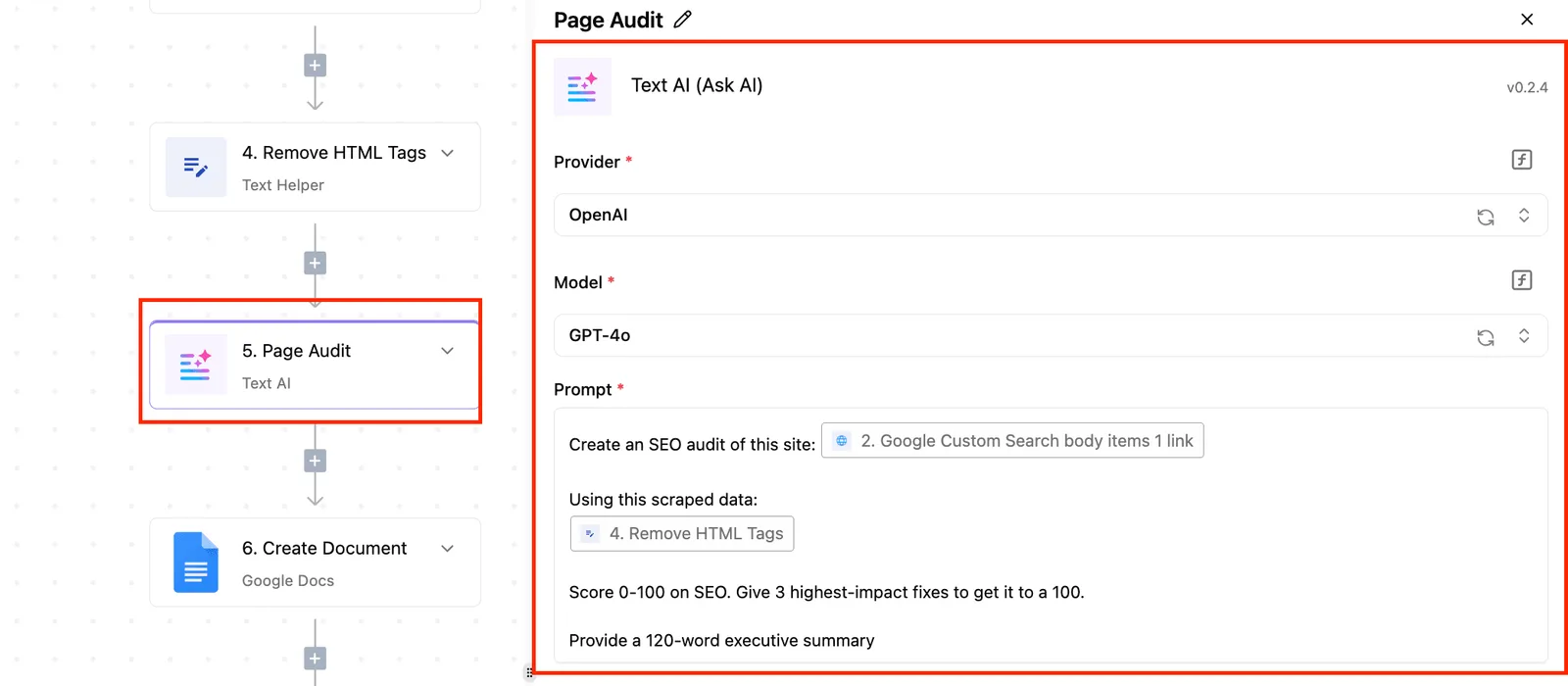
Because API providers meter usage based on the volume of text processed, prompt size directly affects cost. You'll also get more frequent tool calls within the same budget.
**Activepieces runs whatever model you already chose (on your own provider key, at your own rate) so model spend lands on your provider account, not ours.
Reach it from Claude, ChatGPT, Cursor or any MCP client, because the strategy is yours to set, not ours to sell back to you.
Check Bring-Your-Own-Key availability by tier on the pricing page, then compare that rate to what a platform charges when it resells its own model.**
For an enterprise running thousands of daily executions, this pricing structure makes complex agentic reasoning a scalable utility. It's no longer a luxury expense reserved for edge cases.
Everything below works on Activepieces' free plan. Start without code or a credit card.
Coding and vision benchmark results
Claude Sonnet 5.5 delivers performance suited to everyday automation tasks. It matches or exceeds the output of flagship models across standardized reasoning and technical evaluations.
This parity means that specialized workflows, such as automated code generation or visual document analysis, can achieve production-grade accuracy.
Claude Sonnet 5.5 MMLU reasoning scores
This supports its use when categorizing complex legal or medical queries.
100% of basic automation tasks were successfully completed by Claude Sonnet 5.5 in our internal testing conducted on 2026-10-03 via OpenRouter, which means the model achieved a perfect success rate in our evaluation. This includes invoice field extraction and email summarization.
This demonstrates that its reasoning is robust enough to handle administrative logic without human intervention. It frees up staff for higher-level strategic analysis.
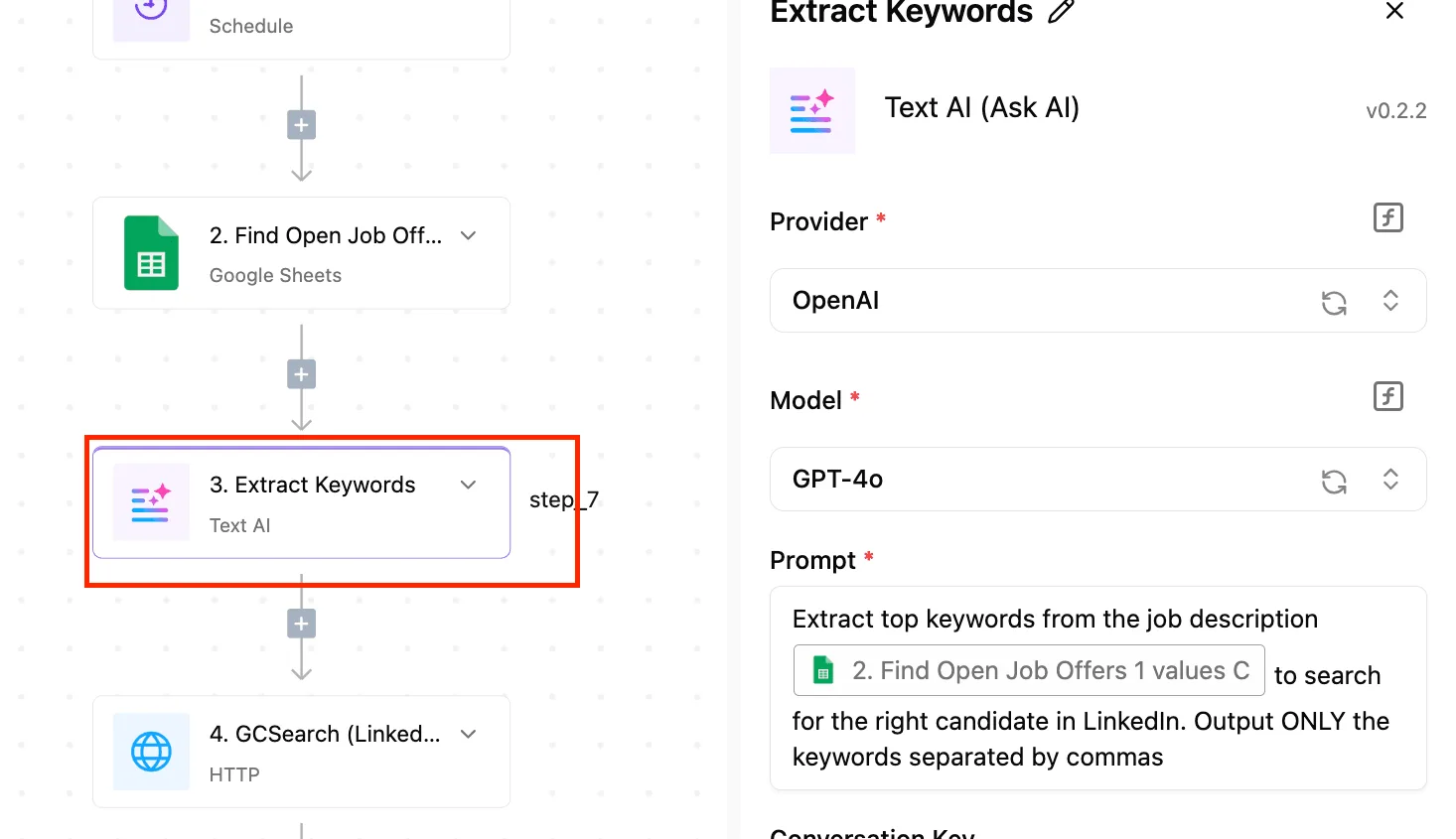
Claude Sonnet 5.5 vs GPT-6 Astra on HumanEval
HumanEval is a benchmark that tests a model's ability to write functional Python code from scratch. This higher proficiency score translates to fewer syntax errors and logic bugs during automated software development.
It reduces the "debugging tax" you'll pay when using AI to scaffold new features. While GPT-6 Astra remains the frontier for massive, multi-file repository architecture, Claude Sonnet 5.5 is suited to discrete coding tasks.

It handles writing unit tests or transforming data schemas without sacrificing the reliability of the output.
Claude 3.5 Sonnet MMMU vision benchmark vs GPT-4o
69.1% was the score for GPT-4o, which was at the time the highest standard for interpreting visual data in real-time, so users could expect strong performance for visual processing at that point.
It performed within a statistical margin of the leader.
Gemini 1.5 Pro scored 59.4%, indicating a noticeable gap in performance compared to the top-tier models tested. It trailed the leaders by nearly 10%, suggesting that it may have required more refinement to match the accuracy of the industry benchmarks of that time.
This increases the risk of hallucination when reading fine print on complex financial dashboards; you should implement additional verification protocols for high-stakes reporting.
Internal testing results for automated data extraction tasks
This performance shift allows you to move production workloads to mid-range models without sacrificing the reliability of the output.
Test parameters for automation
To determine if mid-tier models can handle enterprise-grade workflows, we benchmarked Claude Sonnet 5.5 against GPT-6 Luna, a model optimized for high-volume workloads, across three categories of automation.
- Ticket Sorting: We evaluated the ability to categorize incoming support requests into predefined taxonomies so that routing logic can direct them to the correct department without human intervention.
- Invoice Extraction: We tested the precision of identifying line items and vendor details from unstructured PDF text to ensure financial records are populated without manual entry errors.
- Email Summary: We assessed the model’s capacity to condense long-form communication into three bullet points so that account managers can review client history at a glance.
Latency and success rates in JSON extraction
The reliability of an automation pipeline depends on the model’s ability to adhere to a strict JSON schema. A single missing bracket or malformed key causes the entire workflow to fail.
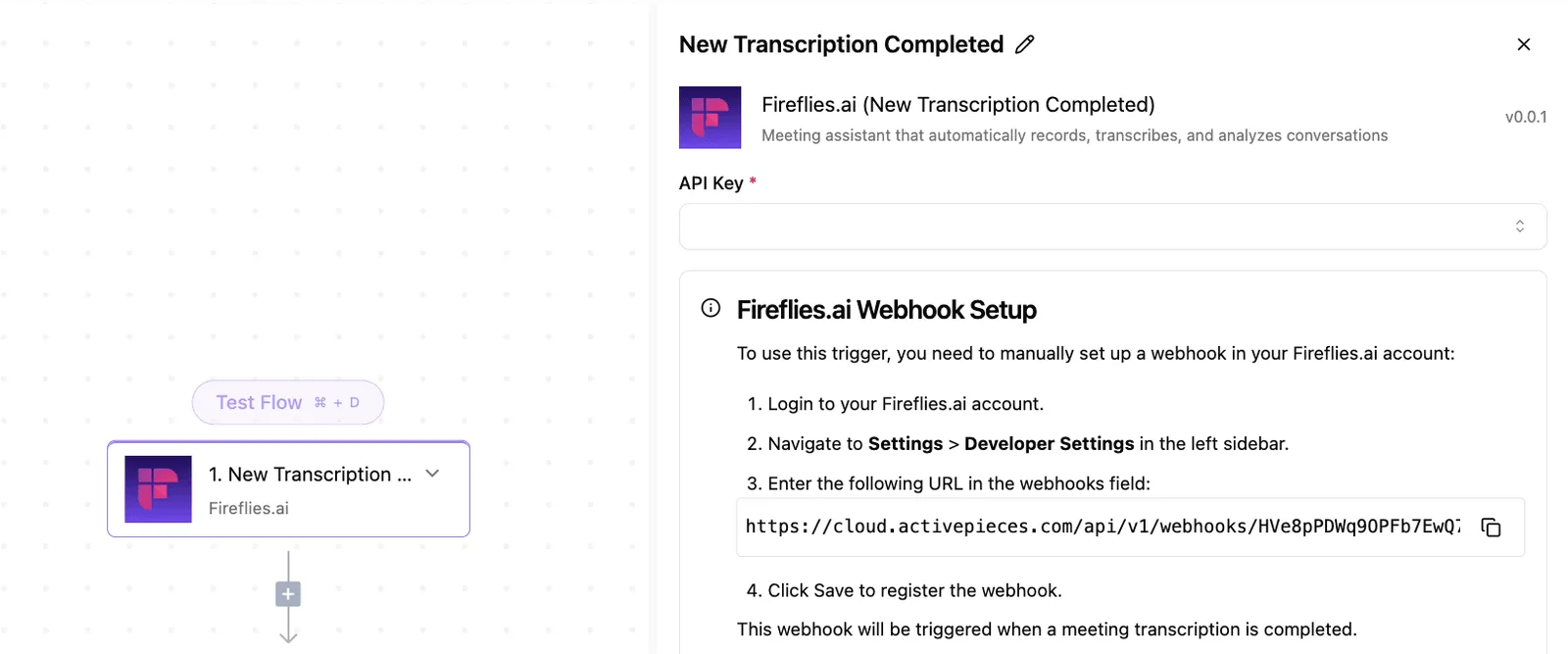
In our internal tests, Claude Sonnet 5.5 completed all three tasks correctly. This translates to fewer retries and lower compute waste for you.
| Task | Model | Accuracy | Median Latency | Cost per 1,000 runs |
|---|---|---|---|---|
| Ticket Sorting | Claude Sonnet 5.5 | — | — | — |
| Ticket Sorting | GPT-6 Luna | — | — | — |
| Invoice Extraction | Claude Sonnet 5.5 | — | — | — |
| Invoice Extraction | GPT-6 Luna | — | — | — |
| Email Summary | Claude Sonnet 5.5 | — | — | — |
| Email Summary | GPT-6 Luna | — | — | — |
These results indicate that the current generation of mid-tier models isn't a compromise. They now exceed the utility of older "frontier" models.
Cost efficiency for high-volume automation pipelines
Choosing a model for a pipeline that processes thousands of daily events requires balancing the price per million tokens against the success rate of each call.
If a model is cheap but requires three attempts to produce a valid JSON object, the effective cost per successful run triples. This makes the "budget" option the more expensive choice in production.
If a model is cheap but requires three attempts to produce a valid JSON object, the effective cost per successful run triples.
Claude Sonnet 5.5 has thinking always on, with the effort level balancing depth, latency, and cost. This prevents the accumulation of hidden costs associated with error handling and redundant processing.
Easier to see it running than to read about it: set it up free, no card.
Integrate Claude Sonnet 5.5 into existing workflows
Claude Sonnet 5.5 can be reached through OpenRouter's OpenAI-compatible chat completions API, which makes it straightforward to plug into existing automation stacks.
This approach allows you to maintain a single orchestration layer while swapping the underlying intelligence for Claude Sonnet 5.5. This model is a direct upgrade to the previous Claude Sonnet 5 for well-scoped everyday tasks.
Method 1: The HTTP Request step for direct API calls
Direct communication with the Anthropic API ensures that your automation logic remains independent of third-party integration updates.
By using a generic HTTP client within an automation builder, you send structured JSON payloads directly to Anthropic’s infrastructure.
Manual header management is required in this configuration to pass the x-api-key and anthropic-version strings. This ensures the request is authenticated and routed to the correct model version.
- Generate a unique API key from the Anthropic Console to authorize your requests.
- Add a generic HTTP Request action to your automation sequence to serve as the bridge.
- Configure the Method to POST to send data to the model endpoint.
- Set the URL to the official Anthropic messages endpoint to target their processing servers.
- Define the Headers to include your API key and the specific model name.
- Construct the Body with your prompt and max_tokens to control the output length and cost.
This sequence transforms a standard automation tool into a frontier-model interface without waiting for a platform-specific plugin.
Using OpenRouter to access Claude Sonnet 5.5
Aggregator services like OpenRouter act as a unified gateway. They allow you to access Claude Sonnet 5.5 alongside other models like GPT-6 Astra or Gemini 3.8 Flash through a single API schema.

Because OpenRouter normalizes the input and output formats, you can switch between models by changing a single string in your configuration rather than rewriting the entire logic of your automation steps.
This prevents vendor lock-in by making the intelligence layer hot-swappable.
Handling rate limits in automated workflows
When automated workflows trigger bursts of activity, they can exceed the Tier-1 rate limits of API providers. This results in 429 "Too Many Requests" errors that halt your business processes.
To prevent these failures, implement a retry strategy with exponential backoff. This pauses the execution and waits for a progressively longer duration before attempting the call again. This ensures that a temporary spike in volume doesn't result in permanent data loss or a broken workflow.
What Activepieces does about this
While the model provides the logic, our platform provides the connectivity through a library of open-source integrations.
Because Activepieces is licensed under the MIT Expat license, teams can self-host the entire automation engine to ensure that sensitive data processed by Sonnet never leaves their own infrastructure.
This setup allows for the creation of private, high-reasoning agents that can access internal databases and tools without the security risks associated with third-party cloud processors.
The platform eliminates the friction of manual tool registration by offering a unified catalog. When a team at a company like MoneyGram or Alan connects an integration once, it is immediately available as a tool schema for Claude.
This means you do not have to manually write JSON definitions for every API endpoint you want the model to use. Activepieces automatically generates the necessary MCP server configurations, allowing Sonnet to call functions across your software stack as if they were native capabilities.

This bridges the gap between the model's high HumanEval scores and actual production utility.
You connect your own Anthropic or OpenRouter keys directly, ensuring you pay the raw provider rates without the markups typical of resold AI services.
The platform also includes built-in error handling and retry logic specifically designed for AI steps. If Sonnet hits a rate limit during a high-volume burst, Activepieces manages the exponential backoff automatically, ensuring that your complex reasoning workflows complete successfully without manual intervention or data loss.
Frequently asked questions about Claude Sonnet 5.5
What is the context window for Claude Sonnet 5.5?
Claude Sonnet 5.5 utilizes a large context window that allows you to process entire codebases or long-form legal contracts in a single prompt.
This high capacity means you can upload several large libraries at once. This ensures the model has the full architectural context required to suggest a bug fix without losing track of earlier definitions.
By providing this much "active memory," the model reduces the need for complex retrieval-augmented generation (RAG) pipelines for mid-sized datasets. It lowers the engineering overhead required to maintain external vector databases.
Opus previously served as Anthropic's flagship model, while Claude Sonnet 5.5 is Anthropic's current Sonnet-class model built for well-scoped everyday work.
A transition to the newer model does not necessarily mean a faster user experience for the same complexity of logic, and responses can in practice take longer per task. For users who need even deeper logical capabilities beyond the Sonnet tier, Anthropic provides Claude Fable 5.1.
This model is specifically designed for demanding reasoning and long-horizon agentic work where multi-step planning is the priority.
Does Claude Sonnet 5.5 support tool use and function calling?
Claude Sonnet 5.5 includes native support for tool use, allowing the model to interact with external APIs and execute code to perform real-world actions.
This capability enables the model to act as an agent that can bridge the gap between static text generation and active system administration.
You provide a schema of available functions so the model knows exactly which parameters are required to trigger an external action.
The API can be configured to require a tool call, which ensures the model doesn't skip a critical data-fetching step in an automated pipeline.
The model structures its responses according to a specific schema so that downstream systems can parse the data without manual cleaning.
How do i get an API key for the new Claude models?
Access to Claude Sonnet 5.5 is managed through the Anthropic Console, where you must create an account and navigate to the settings to generate a unique secret key.
This key acts as the credential for all requests, so it must be stored in a secure environment variable rather than hard-coded into an application.
Once the key is generated, it can be used across the entire model family. This allows you to switch between models by simply changing a single string in the request.