
EmbeddingGemma 2: The Developer Guide to Multimodal Embeddings

Oct 12, 202613 min read
By mapping varied data inputs to a common coordinate system, Gemini Embedding 2 allows automation teams to index disparate media types into a single, unified mathematical space.
Systems can then retrieve images and text using the same semantic queries. Developers can use this to eliminate the fragmented pipelines that traditionally separate visual assets from text documentation.
Gemini Embedding 2 multimodal search for automation workflows
Google's Gemini Embedding 2 release details and specs
Google DeepMind released EmbeddingGemma 2, a 740M parameter open multimodal embedding model designed to bridge the gap between text and visual data.
The model is distributed under an Apache 2.0 license. Engineering teams can deploy it on private infrastructure, keeping full control over their data rather than relying on proprietary APIs.
The release is a high-performance foundation for building retrieval-augmented generation (RAG) systems that can "see" and "read" simultaneously. When integrated via Activepieces, this model populates a unified knowledge base where text and image embeddings are stored in typed tables for retrieval.
The shift from text-only to multimodal embeddings
Because traditional search architectures rely on text-only embeddings, teams are often forced to manually tag images with keywords or maintain separate indexes for different file types.
According to Huggingface, this model is distributed under an Apache 2.0 license. Engineering teams can deploy it on private infrastructure, keeping full control over their data rather than relying on proprietary APIs.
This shared space functions as a multidimensional map where related concepts cluster together regardless of their original format.
For example, a text label describing "a golden retriever playing in grass" and an actual photograph of a golden retriever in grass will point to the exact same coordinates in the vector space.

Even if nobody has manually labeled an image with metadata, this alignment ensures that a user searching for a specific visual concept can find the relevant image.
Search accuracy improves because the system understands the inherent content of the media rather than relying on potentially incomplete human descriptions. Following this alignment, automation platforms can then trigger specific workflows based on the visual context identified within these shared coordinates.
This takes minutes, not a project: automate it in Activepieces free.
Why multimodal embeddings matter for business process automation
By using EmbeddingGemma 2, developers can map a product photograph and its technical description to the same vector, eliminating the need to maintain separate pipelines for visual and linguistic assets.

Multimodal embeddings allow automation teams to represent diverse data types within a unified mathematical space. A search for one retrieves the other without manual cross-referencing.
This consolidation reduces the architectural complexity that typically leads to synchronization errors in large-scale production environments.
Bridging the gap between images and text data
When automation workflows encounter unstructured visual data that lacks metadata, they often stall, creating a manual bottleneck for data entry teams.
EmbeddingGemma 2 bridges this gap by generating a shared numerical representation for both pixels and prose. This allows the system to recognize that a physical object and its written name are functionally identical.
This capability transforms how businesses handle high-volume asset management. Automated product tagging from photos removes the requirement for human staff to manually categorize new inventory.
Visual similarity search for inventory allows warehouse operators to identify replacement parts by uploading a photo rather than guessing technical serial numbers.
Semantic search across scanned PDF archives allows legal teams to find specific clauses within historical image-only documents.
Automated content moderation identifies prohibited visual themes by comparing them against text-based policy embeddings. These applications ensure that visual assets are as discoverable and actionable as the rows in a SQL database.
Improving RAG accuracy for visual documentation
Retrieval-Augmented Generation (RAG) systems frequently fail when diagrams, charts, or technical illustrations trap the relevant information that text-only models cannot "see."
By integrating EmbeddingGemma 2, a RAG pipeline can retrieve specific image segments that contain the answer to a user’s query. This is the visual context necessary to generate an accurate response.
Hallucination cycles are prevented by this grounding, which stops a model from trying to describe a complex machinery schematic based only on a vague file name.
When a technician asks for repair steps, the system retrieves the exact technical drawing and the corresponding manual text simultaneously. This grounds the instructions in the actual engineering specifications of the hardware.

Gemini Embedding 2 MTEB benchmark performance results
By achieving a 61.36 mean score on the MTEB v2 benchmark, EmbeddingGemma 2 establishes itself as a top-tier open-weights contender that bridges the gap between local control and proprietary performance.
This score reflects strong semantic retrieval accuracy for complex enterprise RAG pipelines.
Embedding quality on mteb v2
To help architects evaluate the trade-off between privacy and precision, the following data compares the retrieval performance of leading embedding models across diverse linguistic tasks.
| Model | MTEB v2 Score | Deployment Type |
|---|---|---|
| Cohere v3 | 65.2 | External API |
| EmbeddingGemma 2 | 61.36 | Local / Private |
Prices and plan limits checked against huggingface.co on October 12, 2026.
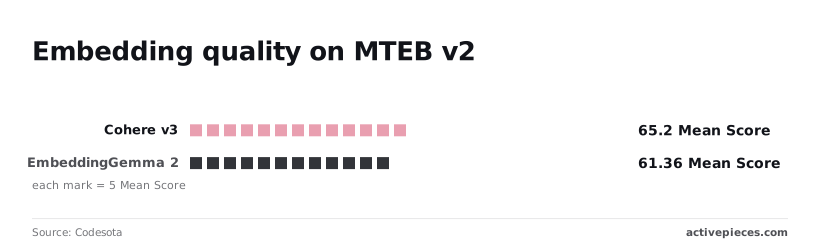
While Cohere v3 maintains a lead with a 65.2 mean score, the Codesota benchmark confirms that EmbeddingGemma 2 follows closely at 61.36.
Data sovereignty and cost-per-token remain significant deciding factors for enterprise deployments. This proximity in scoring ensures that an automated search system built on open weights won't suffer from the "hallucination-by-omission" common in weaker embedding models.
Data sovereignty and cost-per-token remain significant deciding factors for enterprise deployments.
Gemini Embedding 2 27B model hardware requirements
EmbeddingGemma 2 is designed to run on consumer hardware such as mobile devices and laptops.
This allows the model to deliver low-latency semantic representations on devices as modest as a laptop, without requiring data center GPUs.
Because the model utilizes a sliding window attention mechanism, it maintains a constant memory footprint for the KV cache even as document lengths increase.
Developers can index 8,192-token documents.
You can follow the rest of this with the builder open. Start free, no card.
Gemini Embedding 2 throughput and context window efficiency
EmbeddingGemma 2 offers a deep context window, allowing teams to index massive document sets.
This avoids the truncation errors common in legacy vision-language models. While smaller models offer speed, they often fail to capture the full semantic meaning of long-form reports or complex technical manuals.
Gemini Embedding 2 throughput versus context window tradeoffs
Whether an automation pipeline can handle dense, multi-page documents or merely short captions is determined by the architectural trade-off between model size and input capacity.
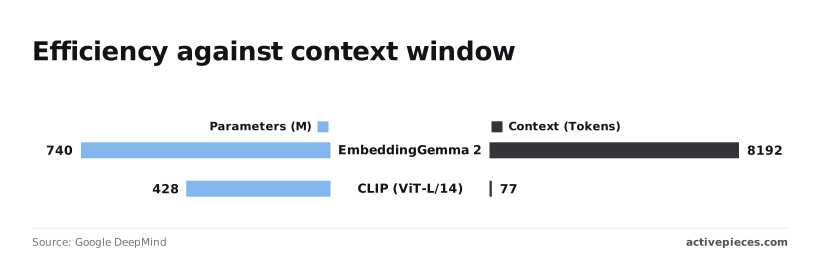
According to the Google DeepMind model card, EmbeddingGemma 2 utilizes 740 million parameters to support an 8192-token context window.
Rather than chunking them into disjointed fragments, developers can embed entire chapters or long-form articles in a single pass.
In contrast, the legacy CLIP ViT-L/14 model operates with 428 million parameters but has a 77-token limit. This forces teams to discard roughly 99% of the text in a standard document and effectively blinding the search index to anything beyond a brief headline.
8192 tokens of context are supported by EmbeddingGemma 2 using 740M parameters to reach a 61.36 MTEB score.
In comparison, CLIP ViT-L/14 uses 428M parameters for a 77-token window.
This highlights that EmbeddingGemma 2's larger context window is essential for maintaining semantic coherence, allowing users to process entire documents without losing context, so researchers can finally analyze long-form content without fragmenting their input.
Why 8192 tokens changes multimodal RAG workflows
By expanding the context window to 8192 tokens, developers eliminate the "lost in the middle" problem where critical metadata or image descriptions are cut off during the embedding process. In a typical Retrieval-Augmented Generation (RAG) workflow, this capacity enables several improvements.
Comprehensive indexing of technical whitepapers is possible where the relationship between a figure on page 2 and a table on page 10 must be preserved.
Vector database noise is reduced because fewer, more meaningful chunks are stored compared to the thousands of tiny fragments required by a 77-token model.
Retrieval accuracy improves for niche queries that rely on specific terminology found deep within a document’s body text.
By capturing more information per vector, teams reduce the computational overhead of managing fragmented data while providing the LLM the full context needed for accurate synthesis.
Connecting Gemini Embedding 2 to your existing workflows today
Integrating EmbeddingGemma 2 into your production pipeline transforms raw unstructured data into a standardized vector format that your automation tools can programmatically query. By establishing this connection, you eliminate the manual friction of data preparation. Your downstream models receive high-fidelity context without human intervention.
Reselling you a model is deciding your AI strategy for you. A privacy-first automation layer avoids this by running EmbeddingGemma 2 on your own provider key and infrastructure, ensuring model spend stays on your account at your direct rate.
By checking Bring-Your-Own-Key availability on the pricing page, architects can confirm that the automation layer does not dictate the model choice or markup the costs.
This keeps the strategy in your hands, accessible from any MCP client or AI chat, while processing 8,192-token documents at the true cost of the hardware.
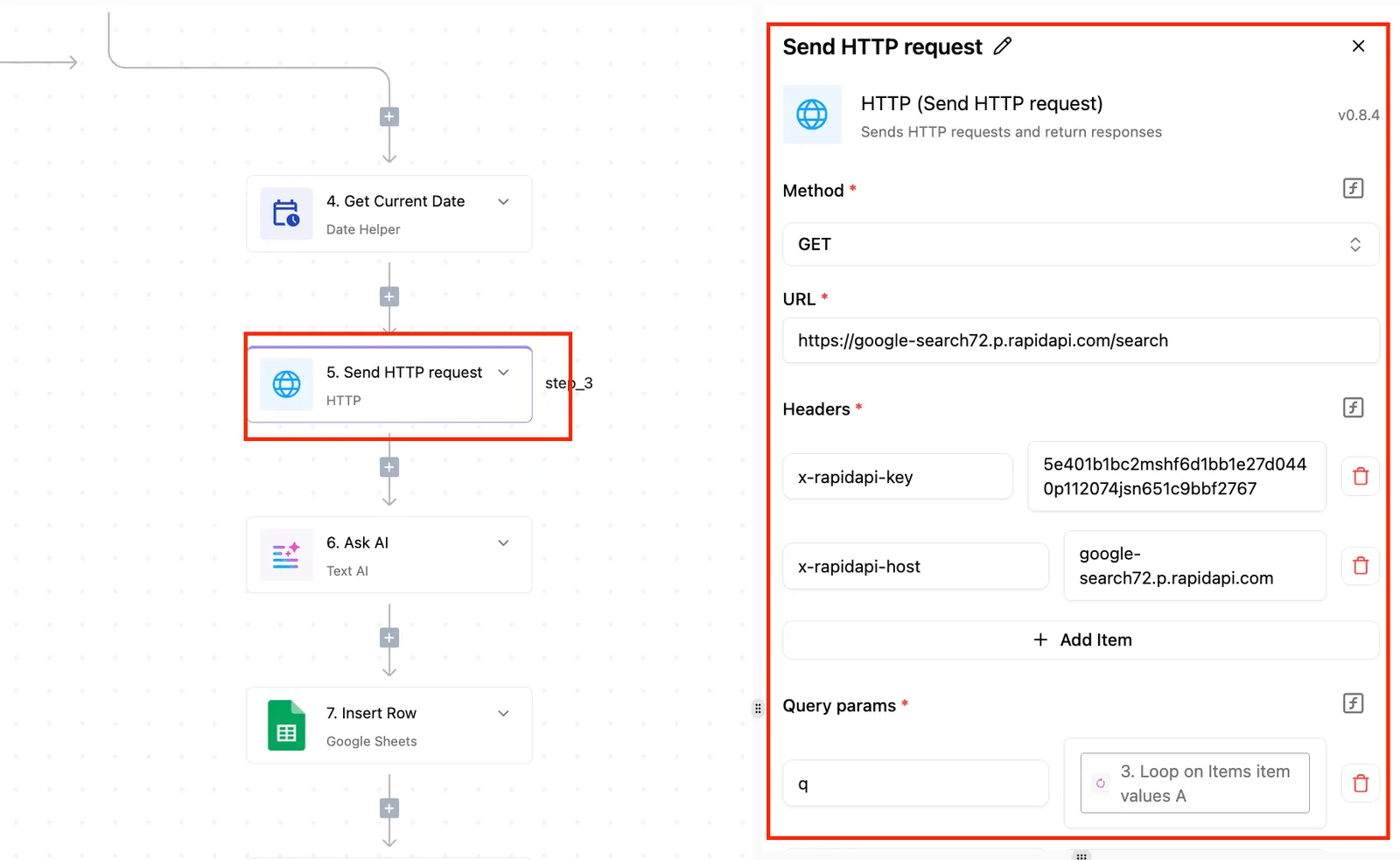
Option 1: The HTTP request integration for direct API calls
By bypassing the limitations of pre-built integrations, directly interfacing with the model via a standard web request gives the most granular control over payload parameters.
This method allows you to tune the embedding process specifically for retrieval, clustering, or classification tasks. The following steps outline the implementation:
- Deploy Gemini Embedding 2 to a GPU provider like Hugging Face Inference Endpoints.
- Create a new flow in your chosen automation environment.
- Add an HTTP Request integration.
- Set the Method to POST and the URL to your endpoint.
Once the connection is established, the output of this integration is the dynamic input for your vector database. Every new document added to your system is automatically indexed in real-time.
Every action configured in this way is immediately available as a tool for AI agents through a per-project MCP server.
By inspecting the Integrations Framework in the open source repository, developers can see how the same logic used for structured flows is exposed to agents in Claude or ChatGPT without a separate migration step.
This allows EmbeddingGemma 2 to function simultaneously as a background indexing step and a real-time retrieval tool for autonomous agents.
Using OpenAI-compatible providers with Gemini Embedding 2
Many automation platforms include native "AI Provider" blocks that follow the OpenAI API specification.
You can repurpose these to call Gemini Embedding 2 by simply swapping the base URL. This approach allows teams to use existing, tested logic for error handling and retries while benefiting from the performance of Google’s open-weight embedding architecture.
By pointing these integrations to a local or private server running the model, you maintain data sovereignty without rewriting your entire automation logic.
Running Gemini Embedding 2 locally with MCP servers
Model Context Protocol (MCP) servers act as a standardized bridge between your local hardware and your automation tools. You can run EmbeddingGemma 2 on-premises while keeping it accessible to cloud-based flows. This configuration is essential for organizations with strict data residency requirements.
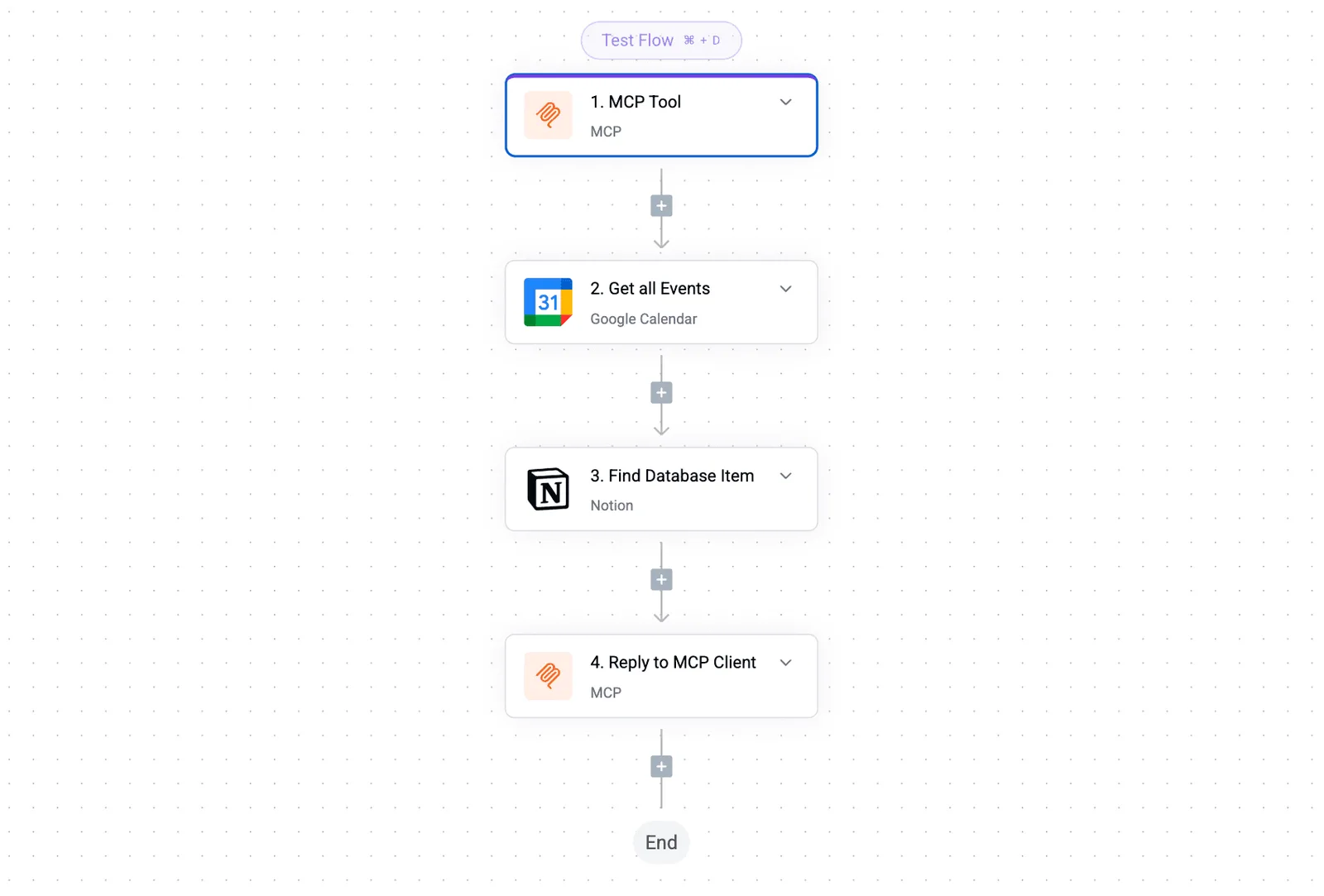
Sensitive information is processed locally before only the anonymized vector embeddings are sent to the cloud. Deploying via MCP ensures that your automation environment can scale its resource usage based on the specific hardware available in your private stack.
What Activepieces does about this
By using the platform’s open-source framework, licensed under the Activepieces Community License, engineering teams can build automated pipelines that monitor folders in Google Drive or S3 and instantly generate multimodal embeddings.
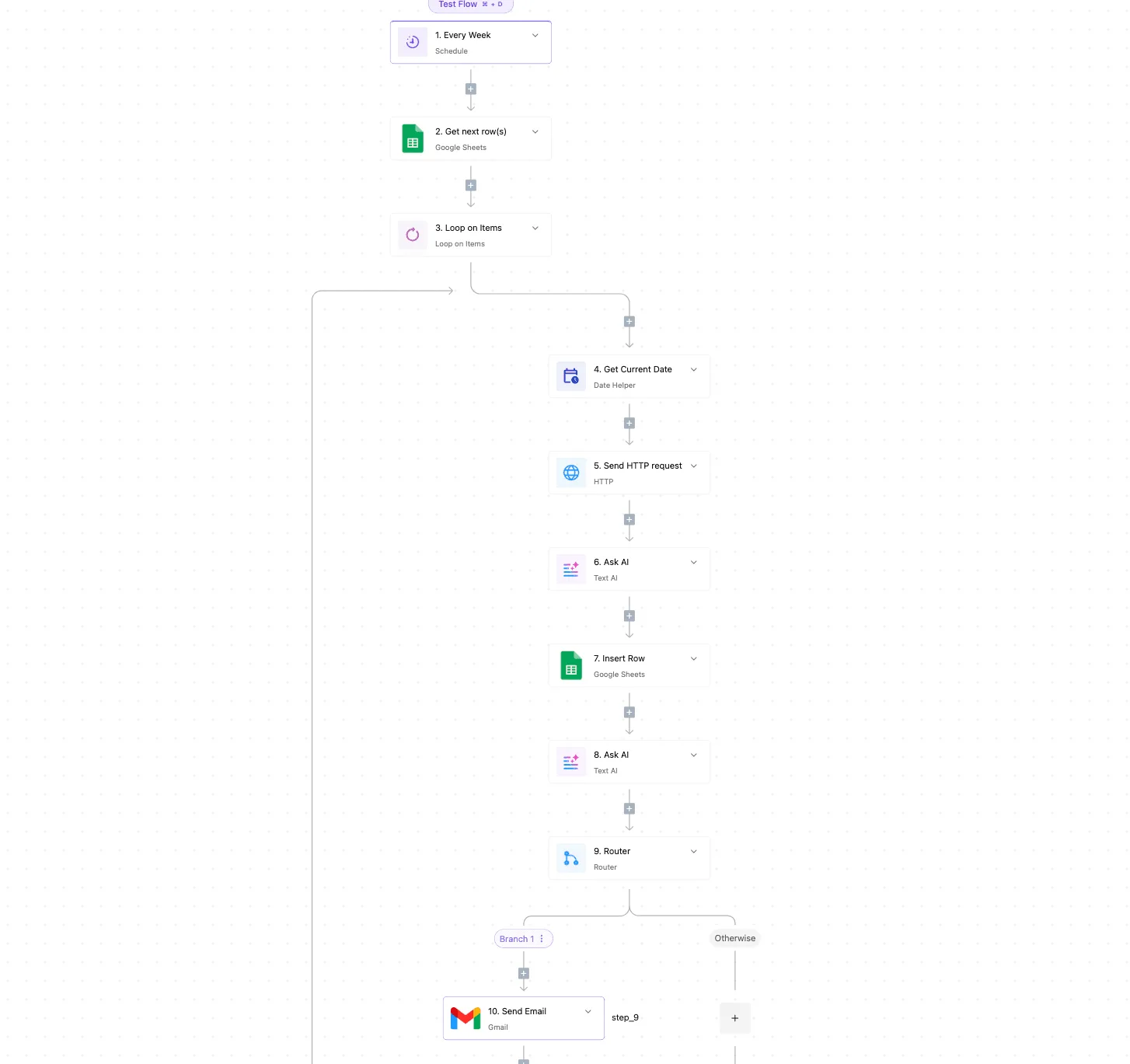
This ensures that as soon as a technician uploads a new machinery photograph or a manual, it is processed by the 740M parameter model and indexed into a vector database like Pinecone or Milvus.
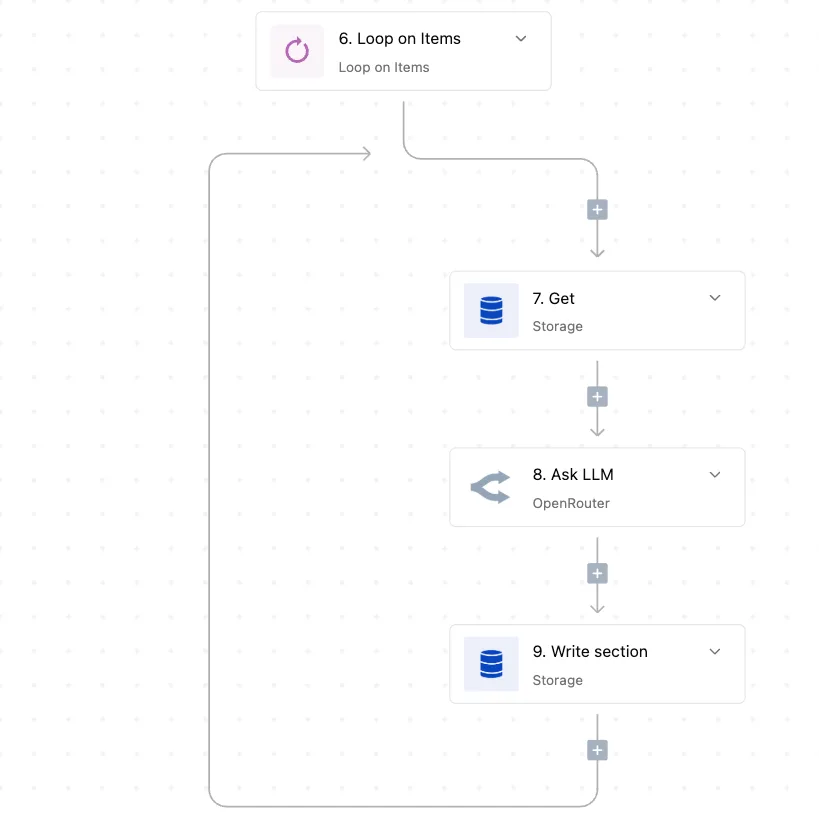
The platform solves the fragmentation problem by treating multimodal embeddings as a first-class citizen in the automation flow. Instead of managing separate scripts for text extraction and image processing, you can use a single flow to pass diverse media into EmbeddingGemma 2.
This unified approach allows customers like ContentReel to scale their content operations by automating the semantic categorization of assets. The system ensures that the 8,192-token context window is fully utilized, capturing the deep relationships between visual diagrams and surrounding text before the data is stored.
To maintain the performance standards established in the MTEB benchmarks, Activepieces allows you to run these heavy embedding tasks on your own infrastructure. By running on your own private inference endpoint, you can deploy EmbeddingGemma 2 on infrastructure you control.
This prevents the latency and privacy risks of routing large multimodal payloads through third-party aggregators. Your automation flows interact directly with your GPU clusters, maintaining retrieval speeds across the entire pipeline.
Frequently asked questions about Gemini Embedding 2
Can I run Gemini Embedding 2 on consumer hardware?
EmbeddingGemma 2 functions efficiently on consumer hardware such as laptops and mobile devices.
Running inference in bfloat16 or float32 (rather than float16) lets the workload run on consumer-grade hardware rather than enterprise-level GPUs.
This allows the 740M parameter model to run comfortably on consumer hardware such as laptops and mobile devices.
While quantization slightly reduces mathematical precision, the impact on retrieval accuracy is often negligible for most RAG applications. This allows teams to maintain local vector databases without investing in enterprise-grade data center clusters.
By utilizing a local deployment, an organization ensures that sensitive intellectual property never leaves their internal network during the indexing process.
Does this model support languages other than English?
Because the model maps different languages into a shared vector space, it has native support for a broad range of global languages.
This allows developers to build unified search interfaces for international datasets without deploying separate translation layers. A user can query in one language and retrieve relevant documents written in another.
This cross-lingual capability eliminates the need for redundant English-only indexes. It reduces the total storage overhead and synchronization complexity for global operations teams.
How does multimodal embedding differ from standard OCR?
Whereas standard Optical Character Recognition (OCR) tools only extract raw text strings, multimodal embedding creates a mathematical representation of the entire visual and semantic context of a file. This distinction changes how an automation pipeline understands data.
Standard OCR converts pixels to characters, which means the system loses the meaning of layout, diagrams, or visual branding. Multimodal Embedding via EmbeddingGemma 2 encodes the relationship between images and text.
A search for "circuit diagrams" returns the actual schematic rather than just a text list of components.
Vector Search utilizes these embeddings to find conceptually similar items, ensuring that a query for "financial trends" surfaces relevant charts even if the word "trend" is never explicitly written in the document text.
References
Build it
Set this up in minutes.
No code required. Connect your accounts, and Activepieces runs it from there.
Start free Talk to sales