
Merge Dev Alternatives: Top Picks for 2026

Nov 14, 202614 min read
A single standardized schema allows developers to interact with dozens of different platforms simultaneously. Choosing the right one depends entirely on whether you prioritize deep vertical data, broad category coverage, or long-term architectural autonomy.

While Merge.dev is a generalist benchmark, specialized teams now select alternatives based on their specific data domain and the degree of transparency required for their production workflows.
The leading Merge.dev alternatives for unified integration
- The Fintech Specialist (Rutter)
- The Multi-Category Scale-up (Apideck)
- The Communications Expert (Nylas)
- The Open-Source Architect (Activepieces), which provides an MIT-licensed core and 748 integrations.
These four providers define the current landscape by balancing the convenience of a single endpoint against the necessity of accessing platform-specific features that generic abstractions often hide.
Rutter for commerce and fintech data
High-fidelity mappings for accounting and commerce platforms are the primary focus for Rutter. Because they specialize in financial primitives, they offer deeper support for reconciliation and ledger entries than general-purpose providers.

When a platform like Shopify or NetSuite updates its API, this narrow focus ensures that the financial data integrity remains intact for the end user.
Apideck for ecosystem-wide SaaS connectors
Apideck offers the broadest range of categories, including HRIS and CRM, for platforms that need to launch entire integration marketplaces at once.
Their "Unify" product allows developers to map custom fields across multiple providers, which prevents the "lowest common denominator" problem where unique data points are lost in translation.
Diverse customer tech stacks can be supported without writing bespoke code for every new request thanks to this flexibility.
Nylas for email and calendar integration
Email and calendar are treated as a specialized infrastructure problem by Nylas rather than just a set of endpoints.
By handling the complexities of sync states and real-time webhooks for providers like Microsoft Outlook and Gmail, they allow developers to build scheduling and messaging features that feel native to the application.
High deliverability and low latency for sensitive user interactions are the direct results of their focus on the communication layer.
Activepieces for custom workflow control
Teams that require the abstraction of a unified interface but can't accept the "black box" nature of proprietary vendors often turn to Activepieces. By allowing developers to self-host the engine and inspect the underlying code, it ensures that sensitive data never leaves a controlled environment.
Activepieces runs the same codebase on managed cloud or self-hosted infrastructure, allowing teams to move flows between environments using the Git Sync and Releases feature.
MoneyGram and FundingSocieties run this in production, utilizing the same MIT-licensed core whether they deploy via Docker, Compose, or Kubernetes to ensure where a workflow runs never dictates whether a team can leave.
The fastest way to settle a shortlist is to try one. Activepieces is free to try, no credit card.
The 2:00 AM API lockout that triggered the search for a new provider
When a unified API provider triggers a sudden surge in automated requests, it can create an infrastructure "polling storm" that exhausts rate limits and incurs massive cloud overages.
When these third-party services lose synchronization with the source data, they often default to aggressive retry logic that floods your backend, leading to immediate service degradation for end users.
The server load cost of unified API polling
A continuous baseline of background noise is created on your servers because unified APIs operate by constantly checking for updates across all linked accounts.
Because these platforms often lack the granular webhook support of a direct integration, they rely on frequent polling to simulate real-time behavior.
Every "no-change" response is paid for by your infrastructure, effectively subsidizing the provider's lack of native event triggers.
During one such incident, the volume of these redundant checks spiked from a predictable baseline to a peak that resulted in a $4,200 cloud infrastructure bill in a single billing cycle, effectively wiping out the projected profit margin for that specific client account.
Every "no-change" response is paid for by your infrastructure, effectively subsidizing the provider's lack of native event triggers.
Paying for the provider's inefficient discovery process rather than successful data transfers is what this means for a growing team.
When unified data models strip away metadata
Standardized data models force every unique field from a specialized tool into a generic bucket, stripping away the metadata that makes those tools valuable.
If a team uses the Grok 4.7 flagship model to perform complex reasoning on CRM data, the unified schema limits them to the fields passed through its "Common Model."
Nobody can reach specific data points their business logic requires when Salesforce custom objects are inaccessible without paying for premium "pass-through" tiers.
GitHub metadata is frequently flattened, which prevents automated agents from making nuanced decisions based on internal workflows.
HubSpot properties that fall outside the standard "Contact" definition require manual workarounds, defeating the "build once" promise of the abstraction layer.
A closed catalogue only expands when the vendor decides it is profitable to do so, leaving teams waiting on a roadmap they don't control. Activepieces bypasses this queue by allowing users to generate missing integrations via AI and add them privately to their own instance.
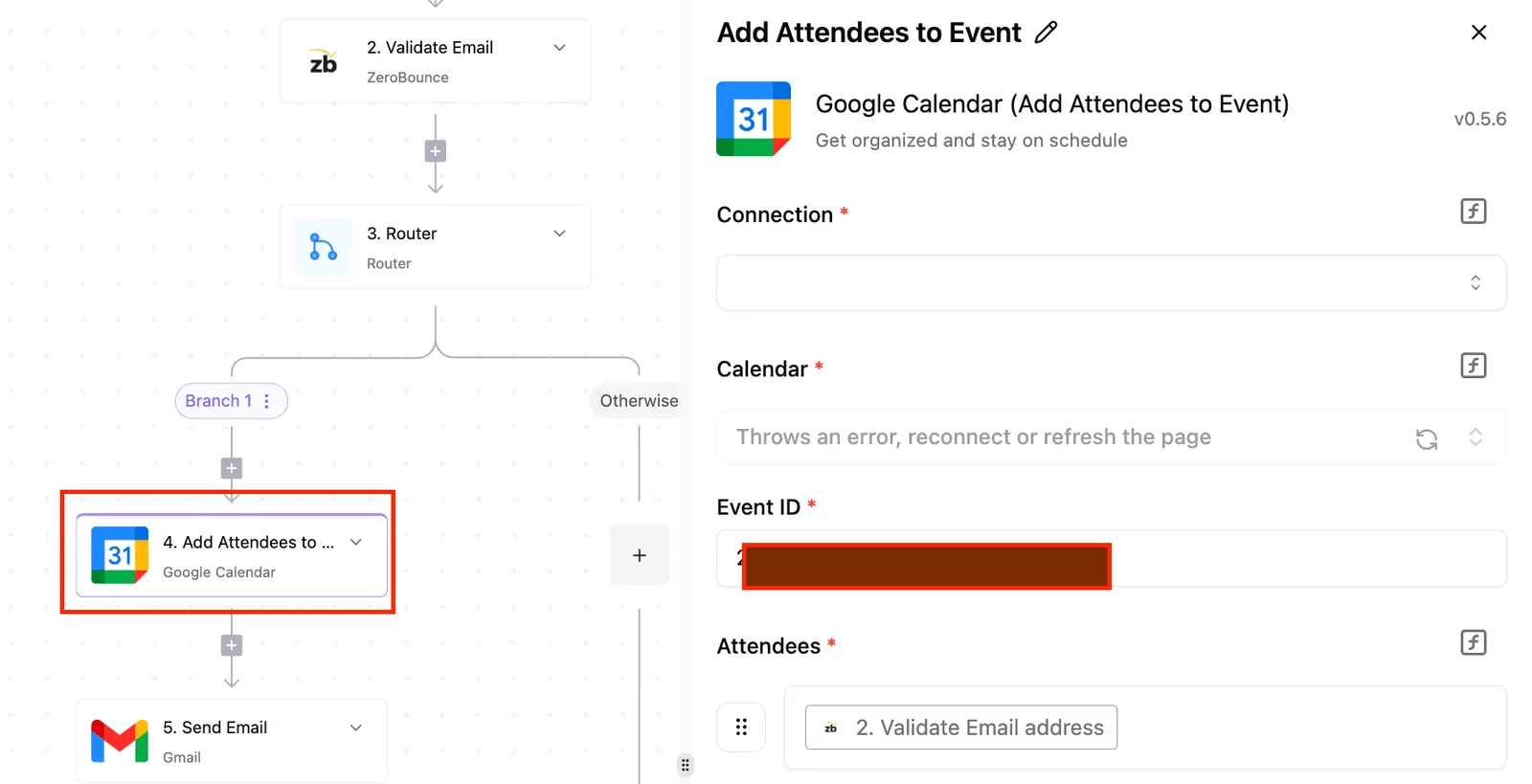
Check the open-source monorepo on GitHub, the 748 integrations are counted directly from the codebase, with roughly 60% of them contributed by the community rather than the vendor, so the platform’s expansion is largely driven by external developers.
How unified APIs add latency and reliability risk
Every request sent through a unified API must be translated twice. It moves once from your application to the provider, and once from the provider to the end service, adding a measurable delay to every operation.
This extra hop introduces a single point of failure where a localized outage at the provider's middleware can lock you out of all your customer integrations simultaneously.
Using a direct, open-source workflow engine allows you to bypass this middleman. Your connection to a service remains active as long as the service itself is online.
Comparing the top 2026 integration platforms on technical merit
Choosing an integration partner requires balancing the speed of a unified schema against the long-term necessity of accessing provider-specific data structures.
For teams scaling high-volume syncs, the market separates into managed abstraction layers like Merge.dev and Rutter, which prioritize normalized data, and flexible engines that allow for deeper environmental control.
| Platform | Pricing Model | Self-Hosting | Custom Field Access | Total Integrations |
|---|---|---|---|---|
| Merge.dev | Per Linked Account | No | Passthrough Request | 200+ |
| Rutter | Per Linked Account | No | Data Mapping | 100+ |
| Apideck | Usage-Based | No | Vault & Proxy | 50+ |
| Activepieces | Usage-Based | Yes | Native Piece Access | 748 |
A fundamental fork in infrastructure strategy is highlighted by this comparison. You must choose between a managed service that handles the normalization for you or a self-hosted engine that keeps you in control of the raw request.
While unified APIs like Merge.dev offer a fast path to supporting dozens of platforms through one schema, they often charge per customer connection, which makes them a significant line item as your user base grows.
Managed normalization for rapid deployment
Proprietary unified APIs excel when speed to market is the primary constraint for a product team.
By handling the heavy lifting of data normalization and authentication maintenance, Merge.dev and its peers allow developers to ship a dozen integrations in the time it would take to build one.
The value of these platforms lies in their ability to abstract away the maintenance burden of changing API versions.
When a provider like Workday or BambooHR updates their schema, the unified API vendor updates their mapping, ensuring your application remains functional without a single line of code change on your end.
The case for Merge.dev in early-stage development
For a startup with a small engineering team, Merge.dev is often the most rational choice for launching an integration suite. The platform provides a polished, ready-to-use Link UI that handles the entire OAuth handshake and credential management process, saving weeks of front-end development.
The normalized data models for HRIS, ATS, and CRM categories are exceptionally mature, meaning a developer can write one query to fetch employee data from both Gusto and Rippling.
This allows the team to focus on their core product features rather than the nuances of third-party pagination and rate-limiting logic.
Handling custom metadata with break-glass access
When your application relies on specific metadata that falls outside a standard "Contact" or "Invoice" model, the "break-glass" mechanism becomes your most important feature.
In platforms like Rutter or Apideck, this requires configuring additional mappings or using a proxy to reach the original provider, adding latency to every call.
Writing custom logic directly against the third-party API is possible when moving toward an open-source workflow engine, without waiting for a middleman to support a new field.
Maintaining these connections at scale requires a clear view of how each platform handles failure and data residency. The vendor's uptime and their specific regional data centers dictate your availability when you can't self-host.
Activepieces runs the same codebase on managed cloud or self-hosted infrastructure, allowing teams to move flows between environments using the Git Sync and Releases feature.
MoneyGram and FundingSocieties run this in production, utilizing the same MIT-licensed core whether they deploy via Docker, Compose, or Kubernetes to ensure where a workflow runs never dictates whether a team can leave.
Reading a table only gets you so far. Build the same workflow in Activepieces and compare it yourself.
Why teams are moving from unified schemas to workflow automation
Unified schemas simplify initial development by mapping different platforms to a single data model.
They inevitably break when your business logic requires data that falls outside that vendor’s "lowest common denominator" definition. For teams scaling beyond basic syncs, the move to workflow engines provides direct access to the raw API responses of every integrated tool.
Why unified APIs strip custom CRM fields
Any data that doesn't fit a pre-defined model is stripped away by unified APIs. This forces developers to write complex "passthrough" logic just to access the custom fields their sales teams rely on.

When a CRM like Salesforce or HubSpot contains specialized industry objects, a unified schema often ignores them to maintain a consistent shape across its other connectors.
By using a workflow engine instead, you preserve the full payload of the original request. This ensures that a field added by a marketing team on Tuesday is immediately available for automation on Wednesday without waiting for a middleware vendor to update their mapping.
Data residency and on-premise processing requirements
Sending every byte of customer data through a vendor's infrastructure is the standard requirement for a third-party unified API.
This often violates the data residency policies of healthcare or financial enterprises. If your security team mandates that PII must never leave your virtual private cloud, a SaaS-only unified API becomes a hard blocker for the entire project.

Open-source workflow engines allow you to self-host the entire execution environment on your own servers.
This ensures that sensitive data processed from an internal database or a tool like GitHub stays within your firewall. It satisfies compliance audits that require physical control over where data is decrypted and stored.
Cost scaling: Per-link vs. per-execution pricing
"Per linked account" is how unified API vendors typically charge. This model becomes prohibitively expensive as your user base grows, regardless of how much data is actually moving.
"Per execution" or "per task" is where workflow engines generally shift this cost, which aligns your expenses directly with the value generated by the automation.
This allows a growing team to support an unlimited number of connected accounts without a linear increase in the monthly bill. It makes it possible to offer integrations to every user as a standard feature rather than a high-tier upsell.
The transition plan for migrating off a unified API provider
Migrating off a unified API requires a phased decoupling that maintains data parity while shifting high-volume traffic to more cost-effective, direct infrastructure.
- Audit current Linked Account usage to identify which customer connections generate the highest API call volume.
- Map existing unified fields to raw provider fields to ensure no data loss during the transition to direct calls.
- Deploy a parallel 'Shadow' workflow that processes the same webhooks as the unified API without acting on them.
- Cut over high-volume accounts to the new engine to immediately realize cost savings on the most expensive links.
- Decommission the unified API once all edge cases in the raw data mapping are resolved.
Moving the most expensive accounts first ensures the monthly bill is reduced while the team handles lower-volume tail cases.
Testing break-glass access for custom fields
Accessing the data the unified provider previously hid or charged a premium to expose is what a successful migration hinges on.
Using a high-reasoning model like Claude Fable 5.2, you can automate the generation of boilerplate code for these custom endpoints. This allows your team to support niche client requirements that the unified abstraction can't handle.
By hitting the raw API of a service like the Salesforce CRM directly, you regain the ability to query custom objects and metadata that are typically stripped away by middleware.
Evaluating the total cost of ownership for 2026
The delta between per-connection fees and the infrastructure costs of self-hosting determines the long-term viability of your integration strategy.
In 2026, as your account count grows, the fixed costs of a workflow engine remain stable while unified API costs scale linearly with every new customer signup.
Transitioning to a decoupled model ensures that your margins improve as you scale, rather than shrinking under the weight of middleware tax.
Frequently asked questions about integration platform migration?
Understanding the structural differences between abstraction layers and workflow engines is required for maintaining high-performance connectivity.
Can I use multiple unified API providers at once?
Routing different categories of data through multiple providers is possible, but doing so multiplies your architectural complexity and monthly overhead. Technical teams often use one provider for CRM data and another for HRIS to ensure the best coverage for specific software categories.
However, this approach requires your developers to maintain separate authentication flows and data schemas for each vendor.
Does switching providers require a full re-authentication of users?
Every end-user is typically forced to re-authorize their accounts when switching providers because OAuth tokens are usually tied to the specific client credentials of the platform that issued them.
If you use a provider's managed authentication components, the refresh tokens are stored in their database, not yours. Moving away from these services means you lose access to those tokens, resulting in a broken connection for your customers.
What is the difference between a unified API and an iPaaS?
A single endpoint to communicate with multiple apps in one category is provided by a unified API, whereas an iPaaS is a complete execution environment for business logic.
Unified APIs act as a translator for specific data models, such as using one schema to talk to both Salesforce and HubSpot.
iPaaS (Integration Platform as a Service) platforms, such as Workato or Make, provide visual designers and hosting for complex workflows.
| Metric | Impact of Integration Gaps |
|---|---|
| Churn rate for missing integrations | 13% |
| Hours to build one custom integration | 150 hours |
| Reactivation rate once a customer leaves | Under 10% |
When a unified API fails to support a custom field your largest client requires, the inability to bypass that abstraction leads to the high churn rates noted above.
Moving toward a more flexible engine allows you to handle these edge cases without rebuilding your entire integration stack.
Still comparing
The fastest way to settle it is to build something.
Open source under MIT, so you can self-host the same thing later.
Start free Talk to sales