Omnara Alternative for Claude Managed Agents (2026)

Oct 22, 202615 min read
Leave omnara only when a specific limit of it costs you something.
Which replacement fits depends on whether you want a remote window onto a coding agent you already run, or a managed runtime that runs agents for you, perhaps one wired into workflow tools like Activepieces.
Start with what it is. Omnara is a platform from the omnara-ai organisation for working with coding agents.
Its blog describes cloud sandboxing features and a post on syncing coding agent state across machines. Those are the only capabilities this guide attributes to it, because they're the ones its own pages state.
Omnara alternatives for Claude managed agents, in short
Omnara pricing and how to get started
You pay nothing for the platform itself, according to the pricing page: bring your own models and machines, or pay as you go for Omnara-managed resources.
That means a $0 platform fee with no per-seat charge, so adding a teammate costs nothing on the platform side. Spend appears only if you choose Omnara-managed resources over your own.
To repeat the check yourself, start with the table below, the fact card this guide worked from. Each row names where the claim came from and the date it was last checked.
| Item | What it says | Source | Checked |
|---|---|---|---|
| Maker | omnara-ai | GitHub organisation | 2026-10-22 |
| What it is | Platform for coding agents with cloud sandboxing and cross-machine state sync | Omnara blog | 2026-10-22 |
| How to get it | Source repository named omnara, plus the hosted platform | GitHub repository | 2026-10-22 |
| Cost | $0 platform fee, no per-seat fees | Omnara pricing | 2026-10-22 |
| Source link | omnara.com/pricing | Omnara pricing | 2026-10-22 |
Prices and plan limits checked against omnara.com and github.com and omnara.com and docs.claude.com and claude.com and gemini.google on October 22, 2026.
Treat the cost row as a floor, not a total. The platform fee excludes model usage and any managed machines, so price those separately before you compare.
Check any claim about omnara and it traces to its pricing page, its GitHub repository or its blog. Each was checked on 2026-10-22.
Activepieces publishes this blog and is a vendor in this space, so we hold ourselves to the same test: each competitor claim in later sections is tied to that vendor's own page, where you can reproduce it before trusting it.
The fastest way to settle a shortlist is to try one. Activepieces is free to try, no credit card.
Four omnara limitations you should consider
Leave omnara only if one of four limits applies to you. Each is something you can check on the maker's own pages and public repo before taking our word for it:
- The product's young, with 162 tags in its repo.
- Machine hosting is pay-per-use. Its scope isn't limited to Claude Code and Codex; it works with any compatible model.
- You need vendor support behind the tool.
Omnara maturity and release stability limitations
When releases are this frequent (162 tags), behaviour can change between versions, so pin one and read release notes before upgrading. The star readings from topairepos.com show the same picture: a project that's growing steadily, not one that has settled.
People keep adopting it, but the track record's short.
If your team can't tolerate an occasional breaking change, that's a reason to move. If it can, it's not.
Scope: a window onto an agent versus a runtime
If your team uses any other coding agent, there's nothing to look through, because omnara is a remote window onto Claude Code and Codex sessions you already run. That's a real reason to leave.
If you wanted a managed runtime that runs agents for you, omnara isn't one, and the gap's one of category, not of polish.
Omnara alternative cost and hosting fit
When machine hosting is pay-per-use, the bill follows hours of use, so a quiet month is cheap and a busy one's not. Run a representative week in a test environment and read the invoice before you commit.

If something fails and you need a named vendor contact, weigh this too, because a young project's support channel is whatever its maker publishes.
If you already run Claude Code or Codex, want to check on sessions from elsewhere, and can accept version pinning, stay. None of the four conditions has bitten you.
Five criteria for choosing an omnara replacement
Judge every alternative on the same five questions, because a feature list won't tell you what a tool costs or where your code ends up. Price: what does it charge, and does the harness change the bill?
Core strength: what does it do well enough that you would pick it over the others? Main limit: what's the one constraint most likely to bite you?
Who it suits: which kind of team or workflow was it built around? Where the agent runs: on your machine, or in the vendor's cloud? Any answer the vendor's own pages don't give is recorded as "not stated on the vendor page", not guessed.
You would assume the model settles the price. It doesn't, which is why price comes first. The HarnessTax SWE-bench Lite results ran the same Claude model through three different harnesses and measured cost per task.

| Harness | Cost per task |
|---|---|
| Claude Code | $1.33 |
| Codex | $0.89 |
| Pi | $0.67 |
That's a spread of almost 2x between the most and least expensive harness, which means your choice substantially affects the final cost.
Before you've changed a single prompt, the wrapper around the model can double the bill. If you compare vendors only on the per-token price of the model, you're comparing the wrong line item.
Because this is one benchmark, reproduce it on a sample of your own tickets before you trust it. A number from SWE-bench Lite tells you the harness matters; it doesn't tell you your own ratio.
**If you compare vendors only on the per-token price of the model, you're comparing the wrong line item.
Last comes the criterion that decides most of the others: where the agent runs. An agent on your machine uses your files, your credentials and your network, and stops when the laptop sleeps.
Run it in a vendor cloud and it keeps going without you, but your repository and secrets have to reach it. Both sides of that trade are real costs.
Here are the criteria, each with its question and the fallback when a page is silent:
- Price: what does it cost per seat, per task or per month? Not stated on the vendor page.
- Core strength: what does the vendor say it does best? Not stated on the vendor page.
- Main limit: what cap, restriction or missing capability does the documentation admit? Not stated on the vendor page.
- Who it suits: which kind of team or workflow was it built around? Not stated on the vendor page.
- Where the agent runs: your machine or the vendor's cloud? Not stated on the vendor page.
With the questions fixed, each option below is answered in the same order, so a gap shows up as a gap rather than being smoothed over.
Reading a table only gets you so far. Build the same workflow in Activepieces and compare it yourself.
Omnara alternatives compared in one table
Run omnara and four alternatives through the same five columns and the gap in each row shows which options are a window onto an agent you already run and which are a runtime that runs agents for you.
Cells are from each vendor's own pages, checked 2026-10-22.
| Option | Price (2026-10-22) | Core strength | Main limit | Who it suits | Where it runs |
|---|---|---|---|---|---|
| omnara (baseline) | See omnara's pricing page | Remote view of a running coding agent | Window only; the agent stays yours | Solo developers | Your machine |
| Claude Code remote access | Included in Claude plans, from $17 a month | Same agent, reached remotely | Tied to Claude plan limits | Existing Claude Code users | Your machine |
| Claude Managed Agents | Anthropic's pricing page | Anthropic hosts the agent loop | You hand over the runtime | Teams without infrastructure | Anthropic |
| AWS AgentCore | AWS usage-based pricing | Runtime inside an AWS account | Needs AWS expertise | AWS-based teams | AWS |
| Happy | Check Happy's own page | Mobile client for agent sessions | A client, not a runtime | Individuals wanting phone access | Your machine |

Read the "where it runs" column first, because it separates the two categories the rest of this section follows.
Claude Code remote access from Anthropic
On Anthropic's pricing page, Free is $0, Pro is $17 a month billed annually or $20 monthly, and Team Standard is $20 annually or $25 monthly, so anyone can start free and upgrade as their needs grow.

Annual billing saves $36 a year on Pro and $60 per Team Standard seat, putting annual-plan customers $36–60 ahead of monthly customers annually.
Match the tier to your usage limits, not to the discount.
Move to Managed Agents and execution runs on Anthropic's infrastructure. That removes a laptop that must stay awake, and it removes your control over the environment.
AgentCore and Happy sit at opposite ends: one's an AWS-hosted runtime, the other a client for sessions you start yourself.
For a remote window at no product cost, a terminal multiplexer over SSH works. Reproduce it on a test machine before relying on it.
Connect any agent to workflows with Activepieces
It doesn't give you a remote window onto a running coding agent.
Activepieces runs the calls to the agent as flow steps, and the build below is an ordered one. Unlimited flows on every plan, including the $0 free plan, means the test flow costs nothing to set up.
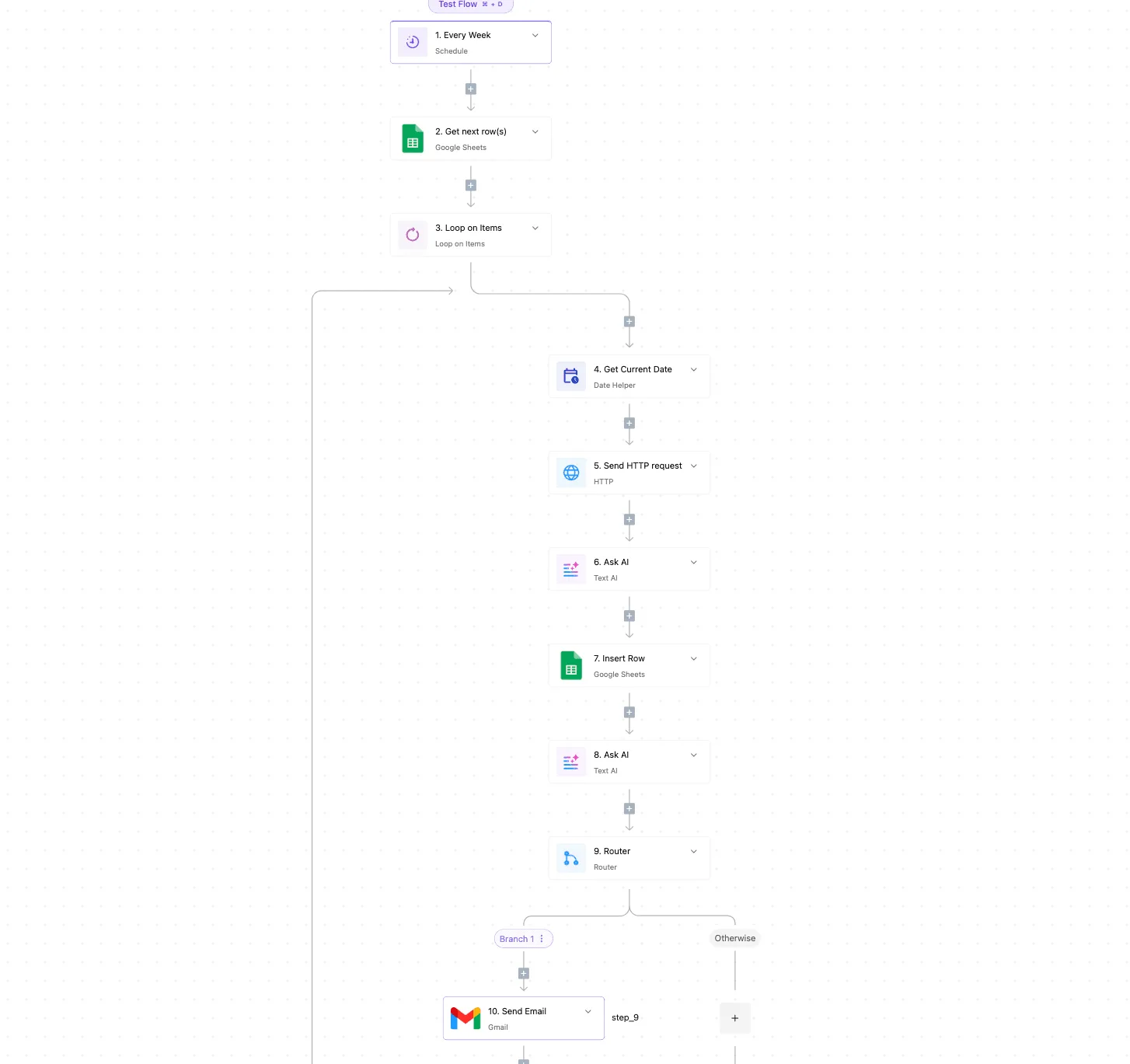
We haven't run omnara, so treat every step as something to reproduce on a test flow before a real task depends on it.
Because each step adds a failure mode the previous one didn't have, the order matters. Get the plain call working first, then add the model, then the tool server.
Simplest: an HTTP request step
Add an HTTP request step that calls whatever endpoint your agent already exposes. Set the method, URL, headers and body by hand, then run the step alone and read the raw response.
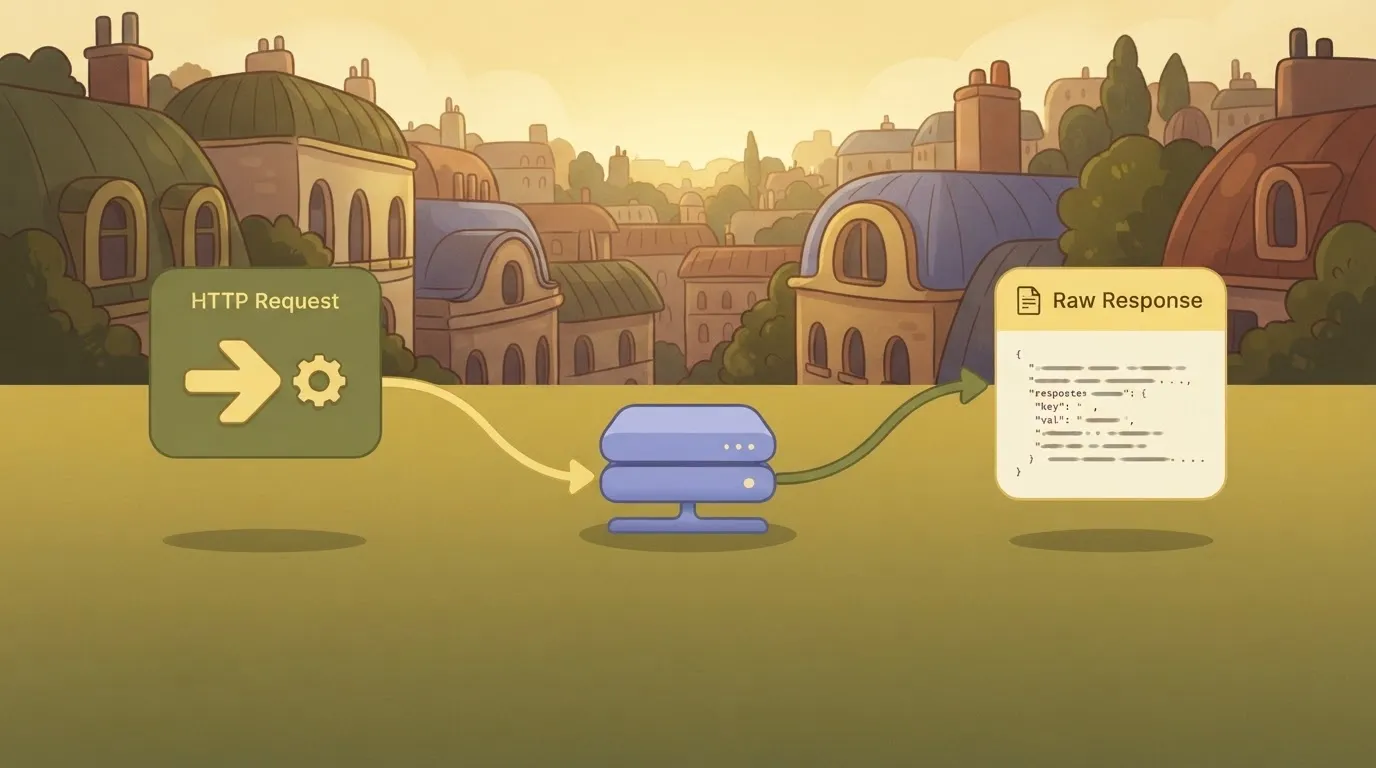
If the agent has no endpoint, stop here: Activepieces has nothing to call, and none of its 744 integrations will invent one for you. A step that returns a clean response is your baseline; every later fault can be compared against it.
Next: an AI step with a custom provider
Add an AI step and point it at a custom provider, meaning a model service you configure yourself rather than one of the built-in options. Feed it the HTTP step's output, so the model summarizes or routes what the agent returned.
Check the provider's own page for the exact base URL and model name before you enter them. A mistyped model name is the kind of fault that fails quietly, with an empty output instead of an error.
Run the step against the saved baseline response, not a live agent.
Most capable: an MCP server
Attach an MCP server, a tool server the AI step can call during its run. This gives the model actions rather than text, which is also why it needs the most caution: a tool the model can call is a tool it can call wrongly.
Activepieces exposes its integrations this way: the action that runs as a flow step is the same one offered to an agent as an MCP tool, and the code sits in packages/pieces of the MIT-licensed open source repo, which is where the 744 integrations are counted, so flow steps and agents draw from the same 744-integration repository.
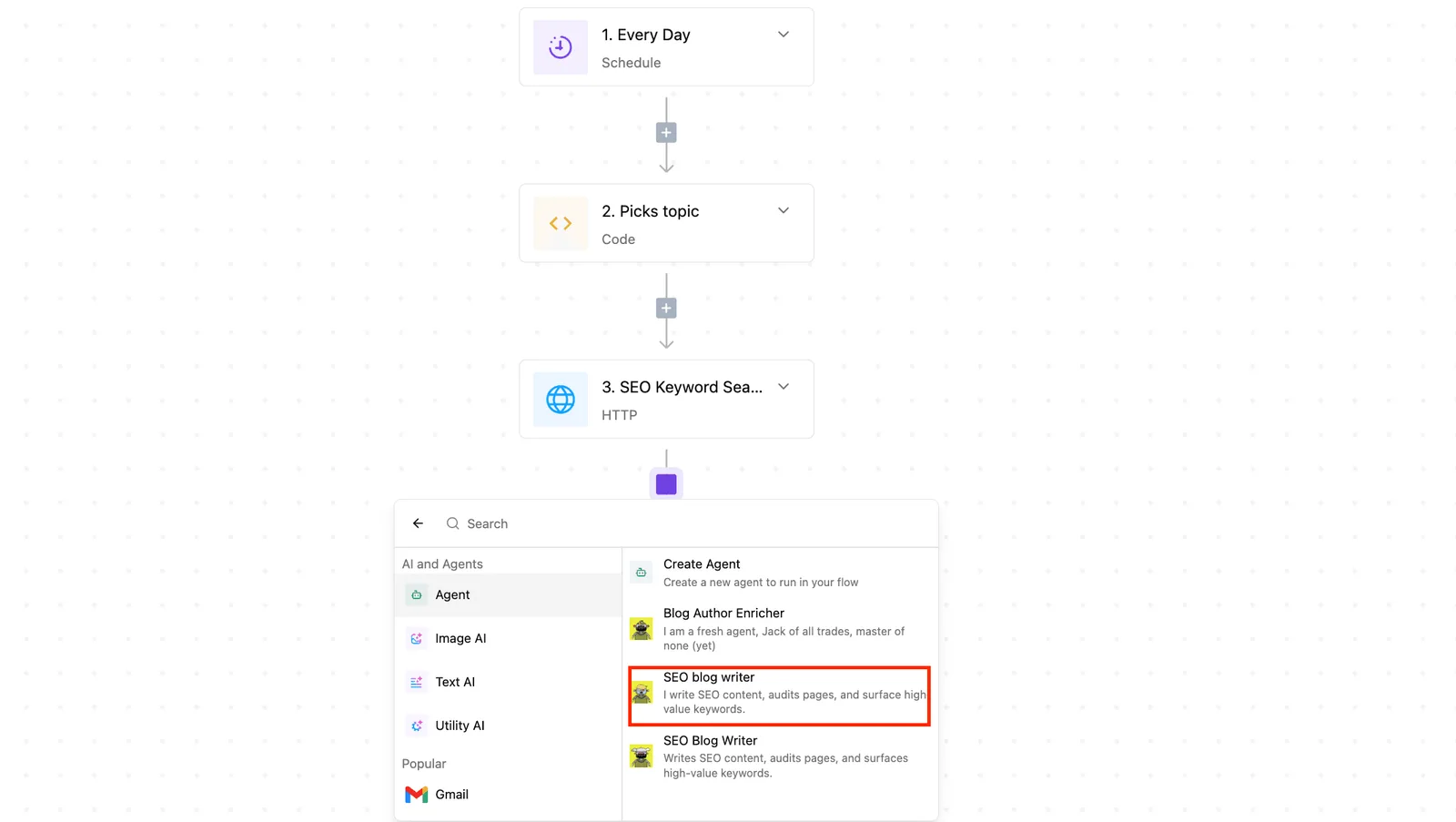
The Integrations Framework and MCP Server documentation each describe this, and packages/integrations/community in the repo holds the integration definitions, where a single action serves both roles. MoneyGram, Moneypenny, Alan and FundingSocieties run Activepieces in production.
Start with a read-only tool, then test the full run end to end and check each step's recorded input and output. Only widen the tool list once the run reproduces twice without surprises.
Activepieces is the better fit for teams that want to wire a coding agent into existing workflows and need one connector set to serve both automation and agent use, judged on how much integration work they have to build twice.
Because the same piece action that runs in a flow is the one exposed as an MCP tool, every connector in the catalog doubles as an agent tool without a second integration.
It is not a substitute for omnara's remote view of a running agent, so if that window is the requirement, this comparison does not favour it.
Verdict: which omnara alternative to pick
Stay with omnara if all you need is to watch an agent you already run and answer it from elsewhere. Move only when a specific limit of that arrangement has actually cost you something.
Which Omnara alternative to pick, and when
When it's time to leave, the symptom is concrete. It's an agent stalled on a question you never saw, a session you couldn't reach from your phone, or a security review that asked who supports the thing and got no answer.
Each of those traces back to a limit you can name.
Without such a limit, switching means paying migration costs to fix a problem you haven't reproduced.
The split is between two jobs. If you need a remote window onto a coding agent that already runs on your machine, omnara does that job, and the question's only whether its gaps bite.
If you need someone else to run the agents, or you need a vendor you can call when a session fails, the first-party route is Anthropic's own offering for Claude. It covers both vendor support and managed running.
Check Anthropic's pages for what each tier includes before assuming it fits; I wouldn't rely on a summary, including this one.
The pick flips on a single question: do you want to keep running the agent yourself? Yes means stay. No means the managed route.
- List every agent you run today: what it does, where it runs, who answers its questions, and how you currently find out it's stuck. An agent missing from this list is one you won't notice failing.
- Recheck prices against the figures dated 2026-10-22 on each vendor's own pricing page. Don't carry numbers over from an older comparison, including your own notes.
- Pick one option and trial it for a week on a single, low-stakes agent. Run the same task twice and confirm it reproduces before you trust it.
- Decide at the end of the week: stay if the limit never bit, move if it did and the trial removed it.
Keep the log of what stalled and what you missed, because the decision is only as good as that week of evidence.
Frequently asked questions
Because most short answers here rest on vendor pages that change, the table shows where each one is published, and the subsections add the caveat. Treat the table as a map of where to look, not a substitute for reading the page.
| Question | Short answer | Where the vendor answers it |
|---|---|---|
| Is omnara free? | Yes, the full platform is free; you pay as you go only for Omnara-managed resources | omnara pricing page |
| Which agents does omnara support? | Whatever its docs list today | omnara documentation |
| Can I self-host? | Yes, omnara is free to self-host and open source under Apache 2.0 | The vendor's docs or repository |
| What are the session limits of a managed runtime? | Stated as a quota | The runtime's service quotas page |
Treat each answer below as a starting hypothesis. Reproduce it in a test account before you build on it.
It may be, but I have no verified plan details to quote, and pricing pages are the first thing to drift. Read the current plan listing, then check that your own usage fits inside the free tier before you rely on it.
Does omnara work with agents other than Claude Code? Check omnara's documentation for its supported-agent list. Don't infer support from a blog post or a demo video.
Run your own agent through a test session, and note whether prompts, approvals and output all arrive in the remote view.
Can I self-host an omnara alternative? Some alternatives publish source or a self-hosting guide, and others only run as a hosted service. The vendor's docs or repository settle it. If self-hosting is a requirement, find that page before you compare anything else.
Does Activepieces integrate with omnara? I can't point to a documented integration between the two, and none of the 744 integrations counted in the open source repo is for omnara, so don't assume one exists.
If you need them connected, look for a webhook or HTTP route that both sides document, and test it end to end before it carries real work.
How often should I recheck vendor pricing? Recheck before each renewal, and again whenever your usage pattern changes. Pricing and limits move without announcement, so date your notes. A figure with no date attached is a rumor.
Related reading
References
Still comparing
The fastest way to settle it is to build something.
Open source under MIT, so you can self-host the same thing later.
Start free Talk to sales