What Is Momentic? A 2026 Review Before You Trial

Nov 3, 202613 min read
Momentic is an AI test automation product
The short answer
Every claim about Momentic here comes from the maker's pages, and the maker has an interest in how those pages read. A homepage such as the one below, from workflow tool Activepieces, whose core is MIT-licensed and public, shows the usual pattern:
- a headline
- two buttons
- a row of use-case cards
All of it is positioning, and none of it is evidence.
If you buy a tool like this, you are paying someone else to carry test upkeep, which is the cost most teams resent. That is the commercial trade-off, and it comes first.
In exchange, you give up some control over how your tests are written and where they live.
Who makes Momentic and its release date
Per momentic.ai, read on 2026-11-02, Momentic is sold by the company of the same name, and that site is the only place I read its description.
I haven't independently confirmed the maker's release date, so find the maker's own statement of it on the site and weigh it yourself. A recent release means a thin public record of how the product behaves in other teams' hands.
How this Momentic review was sourced
Because the maker has an interest in how its pages read, every claim about Momentic here comes from them.
A homepage such as the one below, from workflow tool Activepieces, whose 746 integrations can be counted in its public monorepo, [so the vendor's count is independently verifiable,] shows the usual pattern: a headline, two buttons and a row of use-case cards.
All of it is positioning, and none of it is evidence.
Treat anything on momentic.ai the same way, and check every figure there yourself before it informs a decision. The sections that follow set out what to test.
This takes minutes, not a project: automate it in Activepieces free.
What Momentic does, according to its maker
Read each line in this section as vendor-stated, because everything in it comes from momentic.ai: it tells you what Momentic wants to be judged on, not what a trial will show.
How tests are written
"An AI QA engineer that tests your app end to end" is how the page describes Mo, and it says Mo can "verify critical flows and find bugs from a prompt." The commercial trade-off sits in that wording.
You describe a flow in plain language instead of scripting selectors, so the authoring cost moves from engineers to whoever can write a clear prompt.
That only pays off if the prompt reliably produces the test you meant. The page gives you no way to check that, so your trial has to.
How tests run and are maintained
According to the page, testing is something Mo does for you across the whole app, not a framework you operate. If that holds, your team owns less test code and depends more on the vendor's judgment about what counts as a pass.
That's a control question as much as a convenience one: you may lose some visibility into why a test passed or failed. Run it against your existing suite and compare the verdicts case by case.
What Momentic's pages leave unsaid
In three cases, nothing in the pages I drew on states how Mo behaves. They're silent on ambiguous tests, on how often it reports a bug that isn't one, and on how it handles your data.

Treat those as open items for the trial and for a direct question to the vendor. Until you have answers, Momentic is a candidate to test, not a replacement to plan around.
How to access Momentic and check pricing
Pin down access and price first, because they decide whether a trial is a cheap experiment or a procurement project. momentic.ai says Mo is free to start with no credit card, and you can try it via the web app; check any other route and price on the site yourself.
Start on the maker's site and see which route it offers: self-serve signup, a booked demo, or a sales form. Each route implies a different trial.
Self-serve means you can run it against a slice of your suite this week. A demo-gated route means a sales conversation first, and a trial scoped by the vendor.
Momentic pricing as published
I couldn't confirm a public price list, so I won't quote one. When you find one, a tiered page like the comparison cards below is the shape to look for.
Plans sit side by side, with limits on users, projects, usage allowances, access controls and support type spelled out. If Momentic's page lacks that detail, treat the missing limits as open questions, because the limit you hit first is the real cost.

- What usage does a plan include, and what happens when a run exceeds it?
- Which features, such as single sign-on or audit logs, sit only on higher tiers?
- How many seats and projects does the trial cover?
- What support do you get during evaluation?
- What do you keep, and in what format, if you leave?
Where Momentic excels and where it's unproven
Even Momentic's strongest claim, a benchmark lead, rests on the maker's own benchmark, so it's a reason to run a trial, not a reason to skip one.
Momentic's claimed strengths
On its own QA Bench, Momentic reports that its agent, Mo, found about 269 labeled bugs against about 86 for the next best agent. Each agent got 60 minutes per area across 20 areas, [meaning time pressure intensified as each hour waned].
That's roughly three times the next agent, which, if it holds, means fewer escaped defects per hour of test time. The caveat is that the maker chose the task, the labels and the competitors, so the gap tells you what Momentic believes about itself.

Chart: the maker's own benchmark, labeled bugs found in QA Bench (Mo about 269, next best agent about 86).

On your application, where your bug types may look nothing like the benchmark's, that lead doesn't tell you how Mo fares. It does justify a pilot.
Risks of adopting Momentic early
With Momentic being new, there's no independent track record to lean on. Public reviews are few, which means you can't yet check the claims against other teams' experience.
Vendor pages are written to sell, and a young product has had little time to be tested by people with no stake in it.
If you adopt early, you take on the risk that features, pricing or limits change under you, and you pay for that risk with your own migration time. That is the commercial trade-off here.
What we have not tested
We haven't run Momentic. Nothing here is a measured result from our suites, and the 269 and 86 figures are the vendor's, not ours.
How it behaves on complex suites is the largest unknown: long flows, flaky environments, heavy authentication and data setup. Run it against your existing tests, keep the current suite running in parallel, and compare bugs found, false alarms and maintenance hours before you decide anything.
You can follow the rest of this with the builder open. Start free, no card.
Momentic compared with Selenium, Playwright, Cypress and Testim
You can't check Momentic's maintenance, pricing and lock-in terms outside its own pages, unlike every other tool here, so those columns are what your trial has to fill in.
In the Stack Overflow 2026 survey, Playwright was used by 24.9 % of respondents, Selenium by 12 % and Cypress by 8.2 %. Playwright is therefore used about twice as much as Selenium, so hiring and troubleshooting help are easiest there.
Even Cypress's smaller share means a deep pool of answered questions, which Momentic can't yet offer.
Of the four, Testim is the closest peer: a commercial product that adds AI-assisted locators to recorded tests. Like Momentic, it's a subscription you depend on, so compare the two on contract terms as well as features.
Side by side, the table lays out the five; the "not stated" entries are gaps in Momentic's own pages, not zeros.
| Tool | Authoring method | Who repairs tests | Cost model | Maturity and community | Lock-in |
|---|---|---|---|---|---|
| Momentic | Not stated | Not stated | Not stated | Not stated | Not stated |
| Selenium | Code in language bindings | Your team | Free, open source | Oldest; 12 % usage | Low |
| Playwright | Code | Your team | Free, open source | Newest of the three; 24.9 % usage | Low |
| Cypress | JavaScript code | Your team | Free runner, paid cloud tier | 8.2 % usage | Low to moderate |
| Testim | Recorded, low-code | Vendor AI plus your team | Paid subscription | Smaller community | Tests live in the vendor's platform |
Prices and plan limits checked against momentic.ai and momentic.ai on November 2, 2026.

Put each "not stated" to Momentic as a question before the trial starts, and the answers belong in your comparison alongside bugs found and maintenance hours.
Connect Momentic to your workflows with Activepieces
Activepieces, an open-source AI automation platform whose 746 integrations are counted in the community integrations directory of its public monorepo, whose core is MIT-licensed, has none specific to Momentic, so any link is one you build and maintain from generic steps.
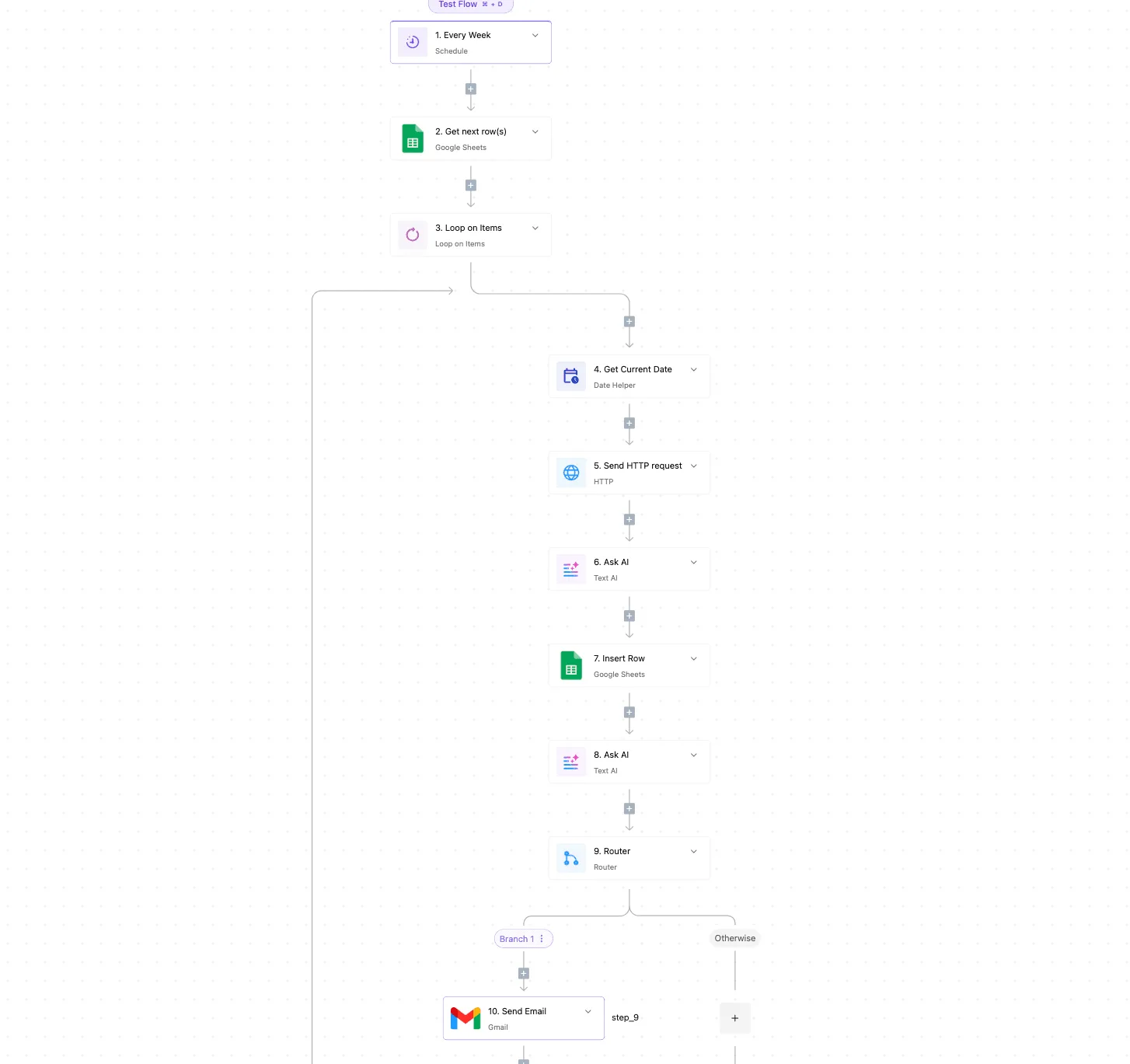
Whether that's possible depends on what Momentic exposes, which is one more question for your list.
Connect Momentic with an HTTP request step
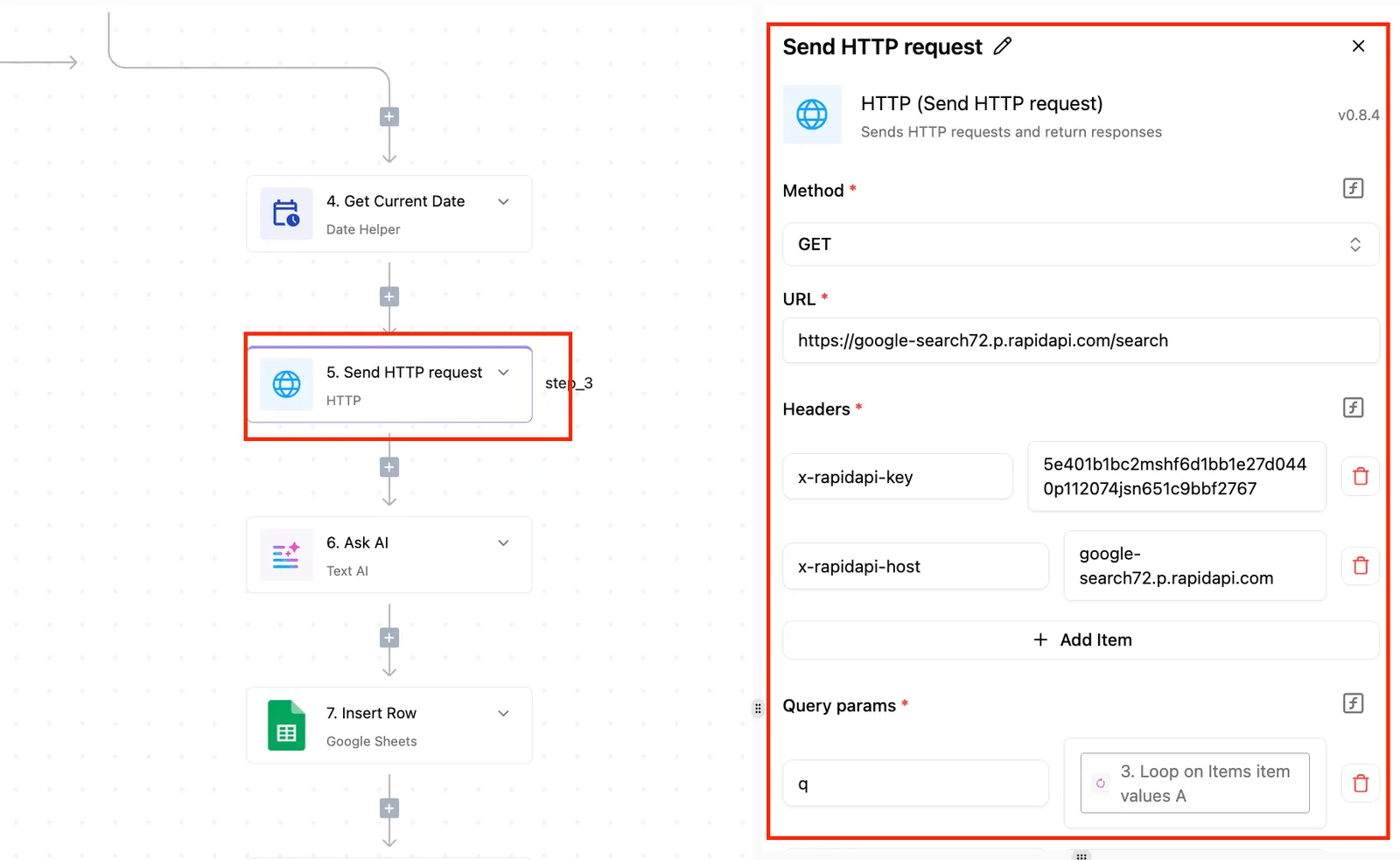
If Momentic offers an API or webhook, the cheapest route is a generic HTTP request step. Its documentation is the place to confirm that; we haven't verified it.
The sequence below, alerting a team channel when a run fails, is a pattern we haven't run, so the commercial point is that you own the glue and its upkeep.
- Check Momentic's docs for an API or webhook that reports run results.
- Add a webhook trigger or HTTP request step in Activepieces to receive or fetch them.
- Filter on a failed status so passing runs stay silent.
- Post the failure to Slack, the team chat tool, so someone sees it.
If the docs show neither an API nor a webhook, the two options below are fallbacks, not equivalents.
If you can point it at something that returns run information, Activepieces can run an AI step with your own provider key; on the Plus plan and up, each such step costs 1 credit and the model cost goes to your own provider bill.
Without that, it helps nothing.
It adds a model's interpretation between your tests and your alert, which is a cost when you want a plain pass or fail.
MCP, the Model Context Protocol, lets an AI agent call external tools. If Momentic offers an MCP server, an agent step could query it. Treat that as unconfirmed until Momentic's own pages say so.
One-week trial plan for Momentic on real tests
Run Momentic against ten of your own tests for a week.
Write the pass line down before it starts, because that costs far less than a migration decided on the vendor's say-so. The steps below run in order, and the order matters because the threshold has to exist before the results do:
- Pick ten flaky or high-value tests.
- Record baseline maintenance hours.
- Send the vendor your questions.
- Run both tools side by side.
- Set the pass/fail threshold first.
- Decide.
The three stages below say what each step involves.
Day one to two: choose the tests
At ten, the set is small enough to review by hand and large enough to include a few awkward cases. Mix chronic flakes with the tests whose failure would block a release.
Then log what your team spends keeping them alive, including triage, selector fixes and reruns. Without that baseline, any saving Momentic shows has nothing to be measured against.
Send the vendor your questions now, since slow or vague answers are themselves a finding.
Run your existing tool and Momentic on the same tests, against the same builds from day three to day five. Log every failure and whether it was a real bug, and note each time someone had to intervene.
Keep your current suite as the system of record, so the trial can't put a release at risk.
Write the pass line before day three: how many of the ten must run unattended, and how much maintenance time must fall, [or day three arrives without this framework]. Then compare results to that line and nothing else.

If Momentic misses it, you've lost a week, not a quarter.
Frequently asked questions
Expect short answers below. They cover only what the sources show, and where momentic.ai is silent, the table says so and sends you to the vendor. Treat every "check vendor" as a question for a sales call, not a gap to guess at.
| Item | Short answer | Source | Status |
|---|---|---|---|
| Free trial | Free to start, no credit card | momentic.ai | Stated |
| SOC 2 | SOC 2 Type 2 certified | momentic.ai | Stated |
| Open source | No claim found in the sources | None | Not stated |
| Independent reviews | None found | None | Not stated |
Without independent reviews, every claim is the maker's own, so the first trial should be yours.
Is Momentic free? It is free to start with no credit card, according to momentic.ai. Budget a short, bounded pilot and agree the terms before you commit engineering time.
Does Momentic replace Playwright or Selenium? Nothing here shows that it does. Run it beside your existing suite on a few flows you already trust, and compare what each catches and how much upkeep each costs.
Is Momentic open source? The sources don't say it is. Assume a hosted commercial product until the vendor tells you otherwise, which means you're renting, not owning.
Can Momentic send results to Slack or other tools? Check the vendor's integrations page. Until you see your notification tool listed there, assume you may need a webhook or your CI pipeline to carry results.
Related reading
References
Build it
Set this up in minutes.
No code required. Connect your accounts, and Activepieces runs it from there.
Start free Talk to sales