
ChatGPT Wallet (2026 Guide)

Nov 14, 202613 min read
When the token expires on the Saturday of a long weekend, nothing alerts anyone until the Monday invoice run.
ChatGPT Wallet acts as a secure financial bridge to prevent these gaps, allowing your AI agents to execute transactions within automated workflows without exposing your primary credit card credentials to third-party vendors.
Nobody wants credential sprawl. By isolating the payment method, OpenAI prevents the security risks that occur when you grant API keys or browser extensions direct access to banking data.
This release marks a departure from static chat interfaces toward active agency. Models like GPT-6 Astra can move beyond suggesting a purchase to actually completing the checkout process.
Delegated authority, rather than open-ended access, is the operating principle here. Every transaction initiated by an agent triggers a mandatory security check. No payment is processed without an explicit human verification step to prevent unauthorized budget depletion.
Enable autonomous AI agent payments
The moment a integration is connected in Activepieces, an agent can call it.
Registering a integration once allows it to run as a step in a flow and as a tool schema on a per-project MCP server, reachable from ChatGPT or a custom agent without a secondary migration.
This mechanism, visible in the core of the platform, ensures that a broad catalog of integrations is immediately available to the AI as a set of functional hands, which means the model can interact with nearly any external software environment without additional custom coding.
Access to this transactional capability is restricted to a specific user demographic during the initial rollout phase to manage risk and compliance. The four eligibility requirements for the initial release are:
- ChatGPT Pro subscription status
- Age threshold (18+)
- US residency
- Eligible US-issued card types
Meeting these criteria is the baseline for shifting an AI from a knowledge retrieval tool into a functional procurement officer. By enforcing these boundaries, OpenAI ensures that the first wave of agentic spending occurs within a monitored, legally compliant framework before a broader global release.
This takes minutes, not a project: automate it in Activepieces free.
Why autonomous payments matter
Preventing financial bottlenecks
Nobody notices for three days. By then the sync has written the same record eleven times.
Autonomous payments allow enterprise agents to clear these financial bottlenecks without human intervention, transforming software from a cost center into a self-provisioning operator.
When a workflow powered by Gemini 4 Carbon identifies a critical security vulnerability, it doesn't halt to wait for a manager to approve a one-time API credit purchase or a premium database export.
Autonomous payments allow enterprise agents to clear these financial bottlenecks without human intervention, transforming software from a cost center into a self-provisioning operator.
By removing the manual "click-to-pay" requirement, you eliminate repetitive procurement steps for low-value, high-frequency operational costs.
The scale of this transition is reflected in the massive expansion of the user base interacting with these agentic systems.
Not every pilot idea survives, but this growth curve indicates that as the system gained the ability to execute financial logic, it became embedded in more professional workflows.
Furthermore, developers are shifting their focus toward models optimized for these complex, multi-step agentic tasks.
Different models now handle different parts of the financial chain. Claude Opus 5.5 handles long-running agentic coding tasks where the agent must purchase its own compute resources to finish a build.

Gemini 3.8 Flash manages enterprise workflows that require rapid routing and instant micro-payments to third-party data providers.
GPT-6 Astra executes high-level reasoning to determine if a specific transaction meets the internal cost-benefit threshold defined by the treasury department.
What is new in ChatGPT Wallet
The ChatGPT Wallet release introduces a programmable financial layer that allows AI agents to move from recommending purchases to executing them within a secure, authenticated environment.
This infrastructure enables models like GPT-6 Astra to manage multi-step procurement workflows without manual human hand-offs for every line item.
Direct integration with the OpenAI API
The wallet is a native tool within the OpenAI API. This means you can now pass a wallet_id directly into the function-calling schema of a model.
By exposing the balance and transaction history as a readable state, GPT-6.1 Terra can verify available funds before attempting to book travel or purchase software licenses.
Because the model interacts only with a tokenized representation of your capital, this integration removes the need for third-party middleware to store sensitive card details.
ChatGPT Wallet spending limits and permissions
Security is managed through a hierarchical permission system that dictates exactly how much autonomy an agent has over its assigned budget.
You select a tier based on the risk profile of the task so that a coding agent like Gemini 4 Carbon can't exceed its operational mandate.
| Security Tier | Operational Consequence |
|---|---|
| Individual Transaction Approval | The agent pauses for a biometric security check, such as Face ID or a fingerprint scan, for every charge, preventing any unauthorized spend. |
| Daily Spending Limits | — |
| Merchant-Specific Allow-listing | The agent transacts directly with businesses using a payment token in place of real card details, rather than being limited to a preset list of verified vendors. |
Prices and plan limits checked against openai.com on November 14, 2026.
These controls allow for the deployment of long-running agents that can resolve their own API costs or infrastructure bills without constant supervision.
Support for Stripe-backed transactions
OpenAI utilizes Stripe to handle the underlying movement of fiat currency and regulatory compliance. Because the wallet is built on Stripe’s existing Connect architecture, it supports instant payouts and automated tax reporting for global transactions.
When an agent pays a contractor or a service provider, this backend ensures that the transaction carries the same fraud protection and dispute resolution protocols as a standard e-commerce purchase.
How to connect ChatGPT Wallet
ChatGPT Wallet connects to external automation platforms by treating the wallet balance as a secure variable within a standard HTTP request.
This architecture allows an agent to authorize a payment only when specific logic gates in a workflow are met.
The connection requires a handshake between the OpenAI API and the target service’s endpoint. This ensures funds aren't released to unverified recipients.
Connecting ChatGPT Wallet with HTTP authentication
Securely linking the wallet to a marketing or fulfillment service requires a POST request. This request carries both the service’s API key and the wallet’s authorization token.
Activepieces puts every agent inside the same access model as your employees: RBAC, SSO, and SCIM govern what an agent may connect to, ensuring that transactional tools are only reachable by authorized identities.
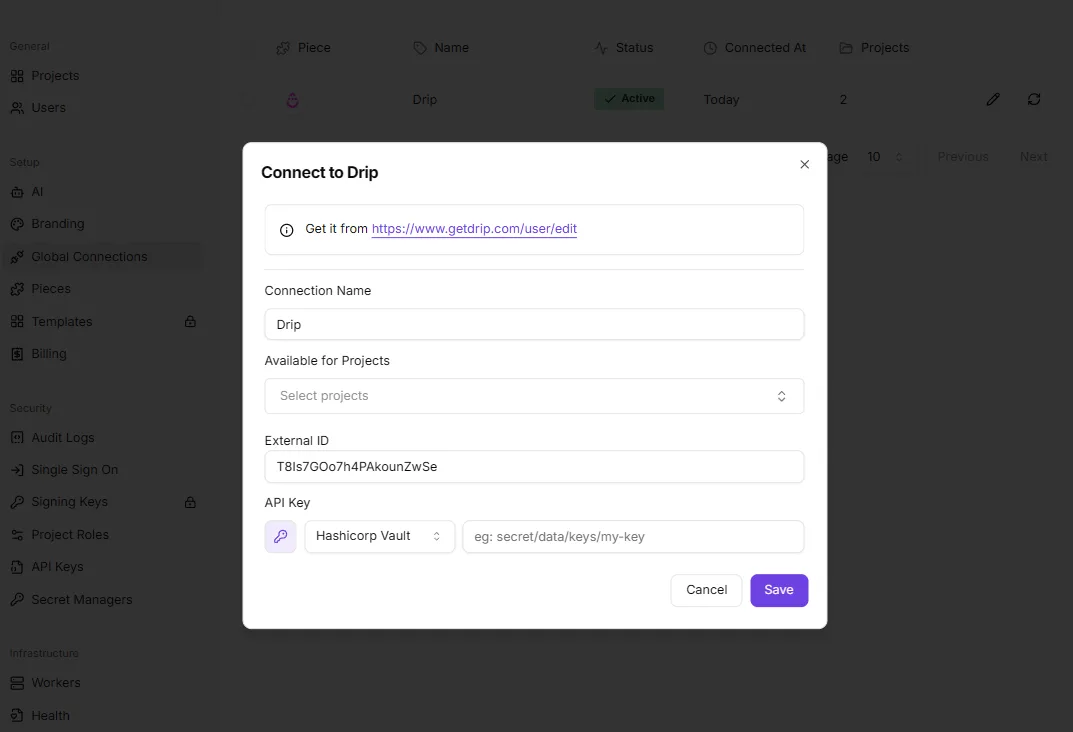
Companies like MoneyGram and FundingSocieties run this in production to maintain governance over automated actions.
Saving this connection allows the workflow to move from simple data entry to paid actions, such as purchasing lead lists or sponsoring newsletter slots.
Managing wallet triggers in OpenAI steps
Transactional logic is handled by GPT-6 Astra. This model evaluates whether a vendor’s invoice matches the parameters defined in the system prompt. Unlike basic chat models, GPT-6 Astra can pause a workflow to request a manual signature if a transaction exceeds the pre-approved budget limit.

If you need high-volume routing and simple ledger updates, Claude Haiku 5.5 is a lower-latency alternative that reduces the compute cost of monitoring transaction logs.
Using MCP servers for financial data exchange
The Model Context Protocol (MCP) allows the wallet to pull real-time pricing data from external databases without storing that data within the model’s training weights.
By using an MCP server, the agent can compare a quoted price against historical market rates stored in a private SQL database before executing a payment.
The agent acts on the current live state of your financial records. This setup ensures that the agent isn't overpaying for services based on stale training data.
You can follow the rest of this with the builder open. Start free, no card.
Integrated wallet automation impacts
Reducing transaction latency
Integrated wallets allow agents to authorize transactions directly within the inference stream.
When a model like Claude Opus 5.5 executes a long-running coding task, every call to an external banking API introduces a round-trip delay that stalls the execution pipeline.
By moving the ledger into the wallet environment, the agent no longer waits for a third-party processor to handshake with a merchant bank.
This allows high-velocity workflows to continue without manual payment intervention.
Traditional credit card processing requires the agent to pass sensitive data through an intermediary vault.
This step adds significant API overhead and potential failure points. By using a native wallet, the agent utilizes pre-authorized tokens to settle micro-transactions for resources like vector storage or specialized API calls.
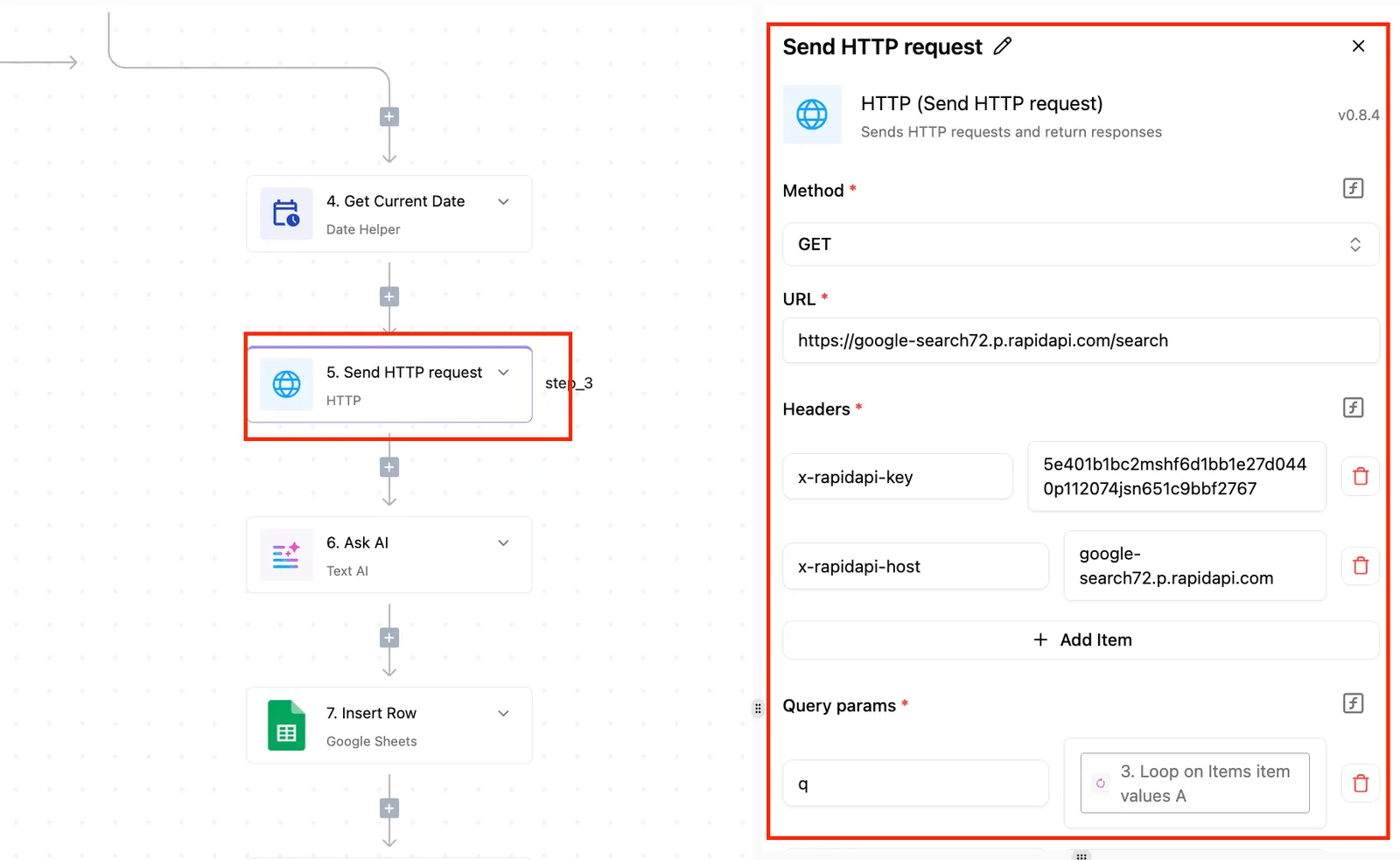
This architectural shift removes the need for the retry logic typically required when a standard corporate card triggers a fraud alert during a burst of automated activity.
The following data illustrates the daily operational costs for researchers who rely on heavy agentic output, where manual payment intervention would otherwise halt progress. For high-tier users, this distribution demonstrates that the volume of transactional events makes manual oversight impossible.
The wallet is the primary governor of the agent’s autonomy. It sets hard caps on spend before a model like Gemini 4 Carbon can initiate a new recursive search or procurement loop.
What to watch in AI payments
The expansion of the AI payment ecosystem depends on the standardization of cross-platform settlement protocols.
These protocols allow disparate model architectures to transact without manual human intervention.
Current friction points exist where a specific model, such as Claude Fable 5.2, needs to procure specialized visual reasoning from GPT-6.1 Terra.
The system currently lacks a unified clearinghouse to exchange credits between Anthropic and OpenAI environments.
Future AI agent payment infrastructure
Future interoperability will likely center on three specific infrastructure shifts. Universal Agent Wallets that hold multi-currency balances, enabling an agent to pay for a GitHub repository subscription or a cloud compute instance regardless of the underlying LLM provider.
Programmable Escrow Services that hold funds in suspense until a verification model, like Gemini Decision 1, confirms the task output meets the predefined success criteria.
Real-time micropayment rails that allow high-volume models like GPT-6 Luna to stream payments per token of output, reducing the financial risk of long-running recursive loops.
What Activepieces does about this
Activepieces provides the execution layer that turns ChatGPT Wallet from a static balance into a functional procurement engine. While OpenAI manages the funds, our platform provides the "hands" required to interact with the external services where those funds are actually spent.
By using the MIT-licensed core, organizations can self-host their automation infrastructure to ensure that sensitive financial triggers and API keys never leave their private network.
This architectural control is why security-conscious firms like MoneyGram and FundingSocieties utilize Activepieces to govern how autonomous agents interact with production environments.
The platform solves the problem of "agent isolation" by exposing every integrated service as a valid tool within the OpenAI function-calling schema.
When an agent identifies a need to purchase a lead list or renew a subscription, it doesn't just suggest the action; it calls an Activepieces flow that handles the authentication, the POST request to the vendor, and the subsequent logging of the transaction.
This is managed through a centralized connection vault where credentials are encrypted at rest, allowing an agent to use a "Drip" or "Stripe" connection without ever seeing the underlying API secret.

To prevent the unauthorized budget depletion mentioned earlier, Activepieces implements a "Human-in-the-loop" step that can be inserted before any transactional integration.
Even if GPT-6 Astra authorizes a payment via the wallet, the workflow can be configured to pause and send a push notification to a manager's mobile device or Slack channel.
The transaction only proceeds once a human provides a cryptographic signature or approval click within the Activepieces interface, ensuring that autonomous spending remains bounded by real-world oversight.
This integration extends to the Model Context Protocol (MCP) by allowing Activepieces to act as a bridge between the ChatGPT Wallet and your internal financial records.
You can build a flow that queries your private SQL database to check if a vendor is already on an approved list before the agent is permitted to initiate a wallet transaction.

By placing these logic gates between the AI and the payment rail, you transform a potentially risky autonomous tool into a governed corporate asset that follows your specific procurement SOPs.
Frequently asked questions about ChatGPT Wallet
Is ChatGPT Wallet available for personal accounts?
OpenAI limits the initial rollout of ChatGPT Wallet to ChatGPT Pro subscribers in the US to ensure that financial transactions occur within a verified, individually authenticated account.
Restricting access to these tiers allows administrators to use the Single Sign-On (SSO) protocols of your organization to verify the human responsible for the agent’s spending.
According to Traccia, without a centralized billing structure, a personal user can't yet delegate payment authority to an autonomous instance of GPT-6 Astra. Individual hobbyists must still manually approve every Stripe checkout or API billing increment.
Administrators can assign granular budget limits to individual API keys and agentic workflows to prevent recursive loops from exhausting a corporate treasury. This control mechanism functions at the identity level rather than the model level.
By setting these thresholds, you ensure that a runaway script in a testing environment can't trigger a catastrophic drawdown of the primary wallet balance.
A high-reasoning agent like Claude Opus 5.5 can be restricted to a specific project budget while a high-volume routing agent using Claude Haiku 5.5 operates under a separate, larger cap.
Does ChatGPT Wallet support crypto payments?
The obvious answer is to mirror production, but the current infrastructure facilitates transactions exclusively through fiat-backed payment rails and established credit networks.
This maintains compliance with standard corporate accounting practices.
While models such as Gemini 4 Carbon or Grok 4.7 can generate the code required to interact with decentralized finance protocols, the wallet itself doesn't hold or settle assets on a blockchain.
Because of the requirements for most enterprise procurement departments, this reliance on traditional banking ensures that every transaction generates a standard invoice for tax reporting and audit trails.
Build it
Set this up in minutes.
No code required. Connect your accounts, and Activepieces runs it from there.
Start free Talk to sales