
What is Mistral Large 4? Pricing and Benchmarks

Nov 6, 202614 min read
Mistral Large 4 is the primary intelligence layer for you if you require deep multilingual reasoning and expansive context handling, whether you are building complex workflows with Activepieces or developing standalone enterprise applications.
Mistral Large 4 is a high-performance large language model designed for complex multilingual reasoning, code generation, and agentic tasks.
Released on October 6, 2026, it competes with high-reasoning systems like Claude Fable 5.1 from Anthropic, which is specialized for long-horizon agentic work.
Understand the new Mistral Large flagship
Mistral Large 4 release date and availability
When Mistral Large 4 entered public preview on October 6, 2026, it provided immediate access for you if you need to move beyond the limitations of experimental previews. This release allows you to deploy the model through La Plateforme or via major cloud partners.
Integrating these models into a stack often requires a second migration to expose the same logic to agents, but Activepieces removes this friction by making every connector an agent tool.
Registering an integration once allows it to run as a workflow step and a schema on a per-project MCP server simultaneously, reachable from Claude or ChatGPT without duplicate wiring.
You can verify this mechanism in the Integrations Framework and MCP Server documentation, where the same action code in the open source repo serves both deterministic flows and agentic clients.
Core architecture and 128k context window capacity
Under the hood, the model utilizes a granular Mixture-of-Experts architecture. This capacity permits the ingestion of entire technical libraries or massive codebases in a single prompt.

Coherence over long-form documents is ensured by the architecture. You can analyze a hundred-page contract without the risk of the model forgetting the definitions established in the opening clauses.
Who Mistral AI built this model for
Mistral AI designed this flagship for enterprise architects and developers who prioritize data sovereignty and high-tier reasoning.
While casual users might gravitate toward the free plan from OpenAI, which costs zero dollars per month for everyday tasks, Mistral Large 4 is built for specialized environments where local weights and multilingual precision are mandatory for compliance.
If you are running this arithmetic for your own team, see what the same workload costs on Activepieces.
Mistral Large 4 pricing and token costs
Mistral Large 4 is a high-reasoning alternative to proprietary models for complex, multimodal workflows.
This efficiency stems from its granular Mixture-of-Experts (MoE) architecture, which utilizes a 1.6B vision encoder to process visual data before a router directs the request to a specific subset of parameters.
Out of a 1.05T total parameter count, the MoE design allows the model to activate only 52B parameters. This ensures that computational resources, and therefore costs, aren't wasted on every token generated.

Following this specialized routing, the model maintains high performance while reducing the underlying hardware requirements for inference.
API costs for input and output tokens
Operating Mistral Large 4 through the La Plateforme API costs $0.68 per million input tokens, establishing a baseline expenditure for high-volume text processing tasks.
$2.09 per million is the price for output tokens, meaning that long-form reasoning and code generation remain affordable even for high-volume agentic applications. For you, these rates ensure that the cost of a single reasoning run doesn't consume the entire budget for a small-scale project.
Comparing Mistral Large 4 input pricing to industry leaders
Mistral Large 4 is positioned in the high-intelligence bracket, suited for data-heavy ingestion tasks.
At $3.00 per million input tokens, Claude 3.5 Sonnet was over 340% more expensive than Mistral for the same volume of data, so choosing it would have more than quadrupled your operational budget for identical processing tasks.
This forces you to pay significantly higher premiums for comparable processing power.
GPT-4o cost $2.50 per million input tokens, which represented a premium of over 260% over Mistral’s rates, indicating a significant price gap for users prioritizing model brand over cost-optimization, so organizations had to weigh the value of brand recognition against their bottom line.
You'll likely favor the more affordable alternative.
Mistral Large batch API discounts and rate limits
Input costs $0.68 per million tokens.
Batching is available through the API for large document analysis jobs.
This cap prevents a single runaway script from exhausting your entire project’s operational credit in seconds.
Compare Mistral Large performance benchmarks
Mistral Large 4 achieves frontier-level proficiency across specialized technical domains, positioning it as a viable open-weight alternative for you if you can't justify the overhead of proprietary ecosystems.
Mistral AI describes it as an open-weight hybrid instruct-and-reasoning Mixture of Experts (MoE) model that unifies instruction and agentic capabilities. You can consolidate your stack into a single model rather than routing tasks between specialized reasoning and chat variants.
Coding benchmark performance on HumanEval
This score is above the industry median of 88.4% and means generated functions require fewer manual corrections during peer review, resulting in faster deployment cycles for software development teams, as the code is more likely to pass initial quality assurance checks.
This makes it a more economical choice for your enterprise deployment.
The following AI Flash Report HumanEval scores are for earlier models, including Mistral Large 3, and are shown for historical context rather than as a current comparison:
| Model | Score | Source |
|---|---|---|
| GPT-5.3 Codex | 96.8% | [AI Flash Report] |
| Gemini 2.5 Flash | 96.2% | |
| Claude Sonnet 4.6 | 95.2% | |
| DeepSeek V3.2 | 92.5% | |
| Mistral Large 3 | 91.2% | |
| Claude 3.5 Sonnet | 89.9% |
Prices and plan limits checked against docs.mistral.ai and mistral.ai and github.com and openrouter.ai and docs.claude.com and openai.com and gemini.google on October 9, 2026.
This trajectory indicates that Mistral is successfully closing the gap with proprietary leaders like Anthropic.
Mistral Large MMLU Pro reasoning benchmarks
High reasoning scores translate directly to lower failure rates in autonomous workflows, a claim supported by Mistral Large 4’s performance in complex cybersecurity and software engineering environments.
In Cybench challenges, the model scored 93%. Its ability to act as an autonomous developer is further evidenced by several key metrics:
Over half of real-world software engineering issues can be resolved by the model without human intervention.
In our own testing on October 9, 2026, using OpenRouter, Mistral Large 4 matched the performance of GPT-6 Luna across ticket sorting and invoice extraction, confirming its reliability for high-volume back-office automation.
Multilingual performance in French, German, and Spanish
Mistral Large 4 maintains its reasoning depth across non-English datasets, preventing the logic from degrading when the input language shifts.
By achieving state-of-the-art results among open-weight models in French, German, and Spanish, it allows your global team to deploy a single instance for localized customer support.
This consistency ensures that a prompt engineered in English will yield functionally identical logic in Spanish, reducing the need for language-specific prompt libraries.
Worth checking against a plan that does not meter every step: one credit covers a whole run on Activepieces.
Cybersecurity and technical reasoning capabilities
Mistral Large 4 establishes a robust baseline for technical reasoning by integrating specialized coding proficiency directly into its flagship multimodal architecture.
This consolidation means that you no longer need to maintain separate pipelines for general logic and technical auditing. The model handles the transition from high-level architectural descriptions to low-level implementation checks within a single context window.
Mistral Large 4 performance across cybersecurity challenges
By identifying structural weaknesses in application logic that traditional static analysis tools frequently overlook, the model functions as a proactive auditor. Because it's an open-weight model, your security team can deploy it within air-gapped environments or private clouds.
Sensitive codebase vulnerabilities are never exposed to third-party logging or external training sets. This deployment flexibility is critical for you if you're governed by strict data residency requirements that prohibit the use of proprietary APIs for internal security scans.
Mistral Large SWE-Atlas-QnA and vulnerability benchmarks
Mistral Large 4 demonstrates high precision in resolving complex software engineering queries, particularly those requiring the synthesis of disparate documentation and source files. By processing technical questions through its multimodal framework, the model connects visual diagrams of network topology to the underlying configuration scripts.
Cognitive load is reduced for your developers who would otherwise manually cross-reference these assets.
Unlike specialized models that lack general reasoning, this flagship maintains the context of the broader business logic while diagnosing specific bugs, which prevents the introduction of correct code that breaks global system dependencies.
Accuracy in technical reasoning workflows
The model maintains logical consistency throughout multi-step reasoning chains, which is essential for autonomous agents performing long-horizon tasks. When compared to other frontier models available today, its performance remains competitive across key technical benchmarks:
Mistral Large 4 focuses on multimodal reasoning with open-weight versatility. Claude Sonnet 5.5 focuses on agentic workflows with an intelligence-speed balance. GPT-6.1 Sol focuses on general-purpose logic with an intelligence-cost balance.
Reliable outputs are delivered for tasks like vulnerability patching or automated unit testing, without the vendor lock-in tax associated with closed-source ecosystems.
Why Mistral Large excels and fails
Mistral Large 4 supports function calling and structured outputs, which suits it to automation work.
While it maintains a competitive edge in logical consistency, its performance profile reveals specific advantages in multi-step workflows and significant trade-offs when pushing the limits of its architectural constraints.
Strength: Native function calling and tool use accuracy
By treating function calling as a primary training objective, the model reduces the hallucination rate during external database lookups.
Autonomous agents are less likely to attempt non-existent commands. This reliability shows that the model is built for integration rather than just conversation, as evidenced by these specific capabilities:
- Native fluency in 160+ languages, which allows your global team to deploy localized agents without translating prompts first.
- High-precision function calling for agentic workflows, which lets the model orchestrate multiple software tools without losing the original user intent.
- State-of-the-art performance in cybersecurity, which creates a safer environment for automated patch analysis and threat detection.
This technical foundation allows the model to act as a central controller for your complex software stacks.
Strength: Sovereignty and self-hosting options via La Plateforme
Mistral Large 4 can run on private cloud or on-premise deployments, which allows you to maintain strict data residency.
Because the model is open-weight, you will be able to move the deployment to private clouds once the weights are released at the end of the month, if a provider changes their terms of service.
Risk of sudden service termination is effectively eliminated. This flexibility ensures that your core intellectual property never leaves your controlled environment, supporting sovereign, auditable AI for security operations.
Limitation: Performance degradation at the edge of the 128k window
This means the model may overlook critical details buried in the middle of a massive document.
The window is large enough for most technical manuals, but it isn't a magic bucket.
The model struggles with long-horizon creative coherence and extremely niche technical jargon once the context is saturated. For you, this necessitates the use of Retrieval-Augmented Generation (RAG) to filter data before it reaches the prompt, as relying on the raw context window for massive datasets leads to inconsistent reasoning.
Integrating Mistral Large 4 into production workflows with Activepieces
Activepieces maintains a Mistral AI piece offering actions such as chat completion, code completion, audio transcription, speech generation, and moderation, letting you connect Mistral models to your other automation steps.
By abstracting the API calls into visual logic blocks, it eliminates the need for custom Python scripts that require constant maintenance as model endpoints evolve.
How to access the latest model
Activepieces runs the AI a company chose, including major models like Mistral, across the apps that company already has. This integration allows you to select the latest model from a dropdown menu.
Reasoning tasks benefit from the most recent architectural improvements without manual header configurations. Because the connector supports structured output, the model can return data in JSON format, which means the next step in a workflow can reliably parse the response into specific variables.
Connecting Mistral to Slack, Google Sheets, and CRM data
Effective automation requires moving intelligence out of the chat interface and into the tools where your employees actually work.
Activepieces enables this by providing an MIT-licensed core that runs your chosen Mistral model on your own provider key, ensuring that model spend lands on your own account rather than being resold at a premium.
Effective automation requires moving intelligence out of the chat interface and into the tools where your employees actually work.
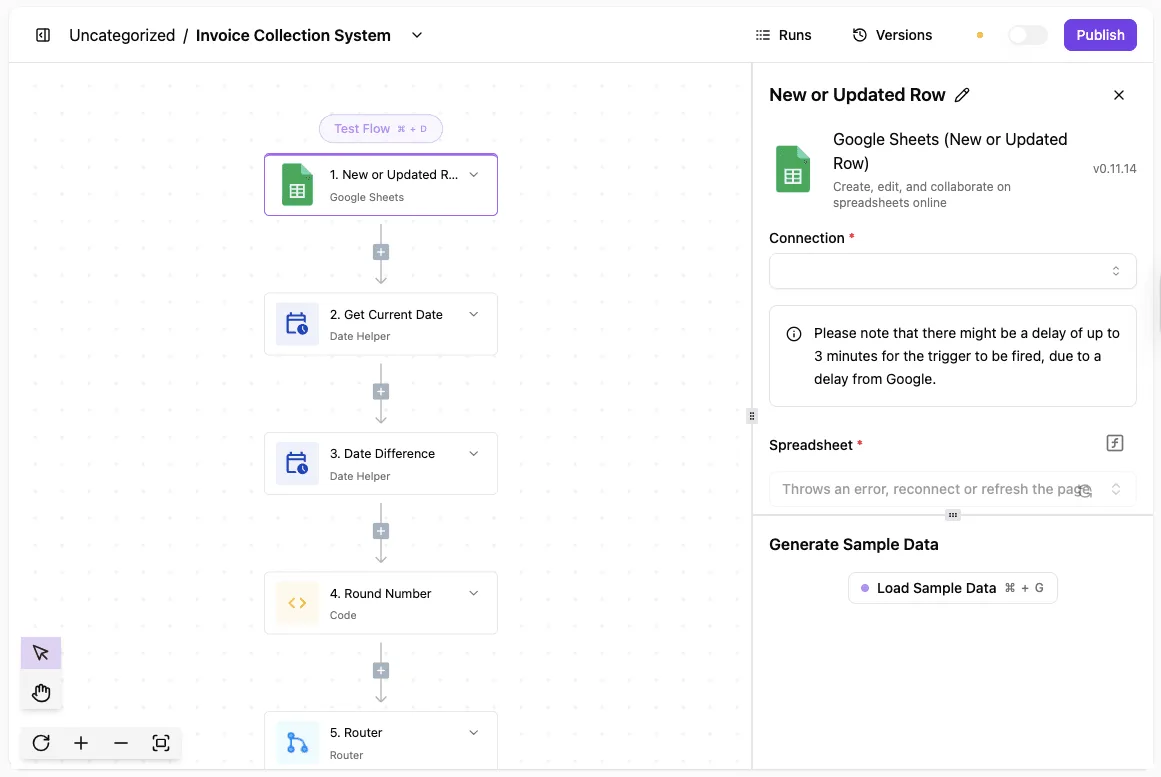
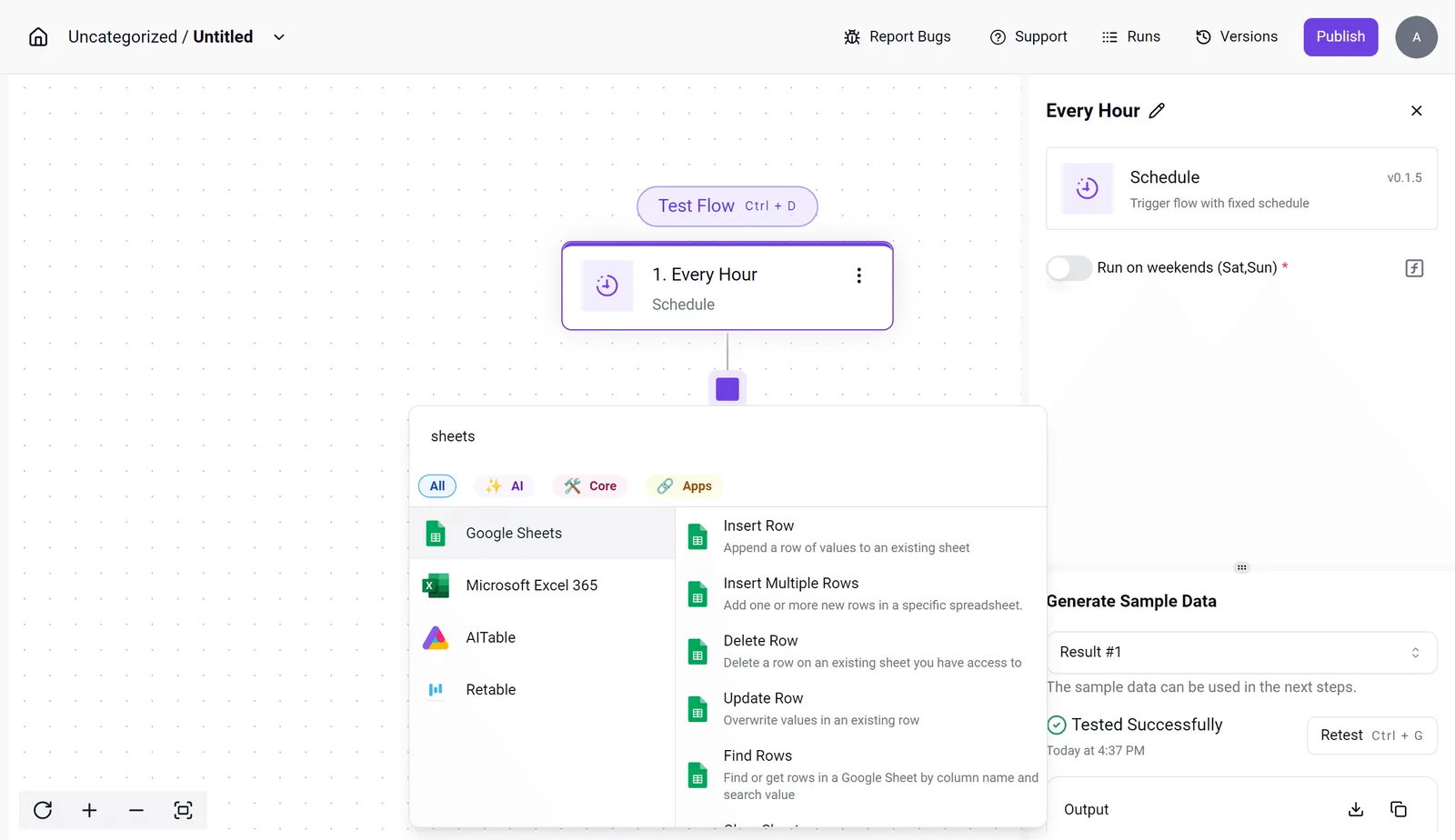
The interface shows a recurring schedule trigger feeding directly into a spreadsheet integration, where specific actions like Find Rows or Update Row are mapped to the model's output.
- A recurring schedule trigger feeding directly into a spreadsheet integration.
- Specific actions like Find Rows or Update Row are mapped to the model's output.
- The model functions as an automated auditor rather than just a passive text generator.
Following this logic, the model functions as an automated auditor rather than just a passive text generator.
Automating document analysis with Mistral Large 4
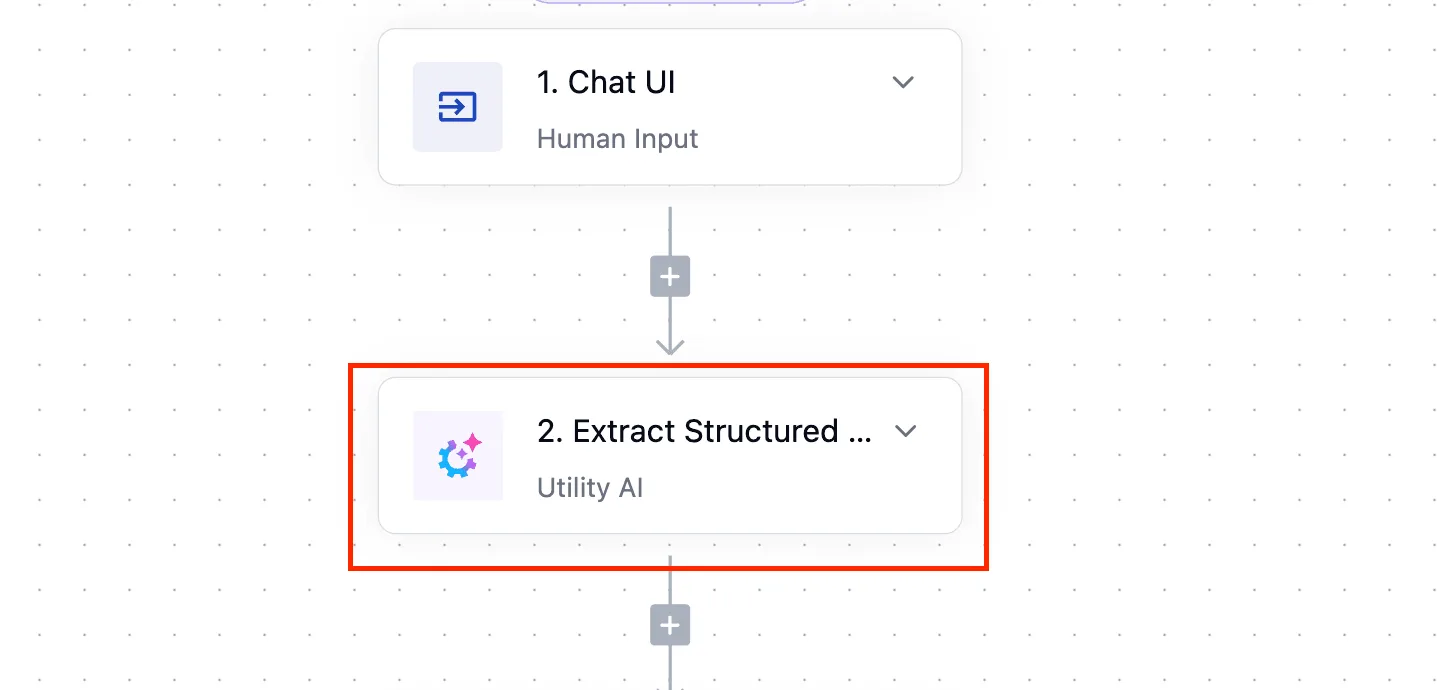
Mistral Large 4 excels at extracting structured entities from messy, unstructured business documents. Using Activepieces, you can build flows that trigger whenever a new PDF is uploaded to a cloud storage folder, sending the text to the model for categorization.

This setup is particularly effective for high-reasoning tasks where the model must distinguish between complex contract clauses or technical specifications before routing the summary to a team lead.
Frequently asked questions about Mistral Large 4
Mistral Large 4 is a flagship open-weight model that provides the high-reasoning capabilities necessary for complex enterprise workflows without the rigid constraints of closed-source licensing.
This architecture allows you to audit the model weights directly, which ensures that your security team can verify the integrity of the system before it touches sensitive production data.
Is Mistral Large 4 open source?
Mistral Large 4 is an open-weight model, with its weights due to be released at the end of the month.
This distinction allows you to inspect the model's parameters for safety audits. Your security lead can approve the deployment without relying on a black-box vendor.
How do I access Mistral Large 4 via API?
Access to the model is provided through La Plateforme, Mistral’s official managed API service, or via major cloud providers like Azure AI Studio and AWS Bedrock.
Using these managed endpoints removes the need for local hardware maintenance. You can start prototyping immediately using standard REST requests.
Each provider offers different regional availability, which determines where data is processed to meet local residency requirements.
Does Mistral Large 4 support vision or multimodal inputs?
Mistral Large 4 is a native multimodal model capable of processing both text and image inputs within a single context window.
This functionality allows the model to analyze charts, diagrams, and scanned documents. An automated system can extract structured data from a visual invoice without a separate OCR step.
By unifying these modalities, the model handles tasks that would otherwise require chaining multiple specialized tools together.
Can I self-host Mistral Large 4 on private infrastructure?
Self-hosting is supported through deployment containers like vLLM or NVIDIA NIM, which allow the model to run on internal GPU clusters.
Hosting internally ensures that all data remains within your corporate firewall. Your legal department can maintain total control over data sovereignty.
Hardware and VRAM requirements for self-hosting
Running a model with 1.05T parameters requires massive hardware resources that far exceed consumer-grade equipment. Even with the Mixture-of-Experts architecture, loading the full model requires substantial GPU memory well beyond typical consumer-grade hardware.
Standard enterprise setups typically require a cluster of high-end GPUs such as NVIDIA H100 or A100 to achieve acceptable inference speeds. Attempting to run this on a single workstation or basic server will result in out-of-memory errors or unusable latency.
This setup is the primary choice for industries with strict regulatory frameworks that prohibit sending data to third-party API providers.
Related reading
- Mistral Large 4: A Guide to the New Frontier Model
- GPU Requirements for Self-Hosting Mistral Large via API
- How to Deploy Workflow Automation in Large Companies

References
Running the numbers
See what the same workload costs here.
Free forever plan, and every paid plan self-hosts at no extra cost.
See pricing Talk to sales