What is x402? The Payment Protocol for AI Agents

Nov 13, 202614 min read
The x402 protocol is a specialized HTTP-based standard that lets your AI agents discover, negotiate, and settle payments for digital resources, often leveraging workflow automation tools like Activepieces to handle background tasks, without you needing to intervene.
By embedding payment requests directly into the 402 Payment Required status code, it turns a stagnant error message into a functional checkout counter for your software.
The x402 protocol and autonomous AI agent payments
A protocol for the machine-to-machine economy
Current models in agentic payment workflows
In the current landscape, an agent running on Claude Opus 5.5 or GPT-6 Astra hits a hard ceiling the moment it encounters a paywall. These models can't independently browse to a billing page to enter credit card details.

This friction forces you to manually pre-fund dozens of individual API keys. This creates a security liability if a single key is leaked or overused.
The x402 protocol allows your agent to pay for exactly what it consumes using a standardized header, reports Brave.
Whether that's a single search result or a specific data scrape, your agent only spends what the task requires. This shifts the financial burden from a static monthly subscription to a real-time micro-transaction.
This shift in volume is already visible in the market. The following data shows the cumulative USDC volume settled via x402 across different tracking platforms, proving that autonomous settlement is moving from a concept to a measurable financial trend:
| Platform | Settled Volume |
|---|---|
| Artemis | $135.7M |
| x402scan | $52.31M |
| Dune | $40.87M |
Prices and plan limits checked against brave.com and docs.claude.com and openai.com and gemini.google on November 13, 2026.
As these settlement figures grow, the infrastructure for connecting your agents to legacy tools becomes the next bottleneck.
An agent is a user, not just a script, and Activepieces manages it as one by applying enterprise RBAC, SSO, and SCIM to what the agent can connect to.
By logging every tool call individually with its own inputs and outputs, it ensures that x402 transactions are never collapsed into opaque results.
An agent is a user, not just a script, and Activepieces manages it as one by applying enterprise RBAC, SSO, and SCIM to what the agent can connect to.
The role of Brave Search in x402 development
Brave, the company behind the privacy-focused browser and search engine, developed x402 to provide a sustainable way for AI agents to access its Search API.
They recognized that while a human might pay $20 per month for a Plus plan to access advanced models, an autonomous agent needs a granular "pay-as-you-go" model, ensuring that automated tasks do not incur unnecessary subscription overhead, which means developers can scale their agent fleets without being tethered to flat-rate pricing.
By implementing x402, Brave allows your agent to query its index, receive a 402 header, and settle the cost in USDC via the Base blockchain instantly.
This allows Brave to monetize its data without forcing you into rigid tiers.
The $8 per month Go plan, for example, may provide more capacity than a single-purpose agent actually needs, resulting in wasted resources for simple automated processes, so companies are effectively overpaying for idle compute time.
Everything below works on Activepieces' free plan. Start without code or a credit card.
How the x402 handshake manages agentic transactions
The x402 handshake automates resource acquisition by enabling a server to reject unauthorized requests with a specific demand for payment that your agent can fulfill programmatically.
This replaces the traditional failure state (where you must manually top up a credit balance) with a machine-to-machine negotiation that resolves in milliseconds.
The 402 Payment Required status code return
Your agent receives a 402 Payment Required status code when it attempts to access a protected resource without a valid pre-paid token or cryptographic proof of funds.
This specific HTTP response is a structured invoice rather than a generic error. It provides your agent with the exact price and the blockchain address required to complete the transaction.
The following sequence defines how a model like Claude Opus 5.5 or Gemini 4 Carbon moves from a denied request to a successful resource delivery:
- Agent requests resource without auth;
- Server returns HTTP 402 + Price/Invoice;
- Agent signs USDC payment on-chain;
- Agent retries request with payment proof;
- Server delivers resource.
The loop prevents the server from providing unpaid compute. It protects the provider from the financial drain of runaway loops or unauthorized scraping.
x402 header authentication and payment balances
Authentication in x402 occurs within the HTTP headers, allowing your agents to pass micro-payments alongside their queries without maintaining long-lived API keys.
By embedding payment hashes directly into the request, your agent proves it's settled the cost of the specific inference or data retrieval before the server processes the logic.
This removes the need for centralized billing databases that track user accounts. The validity of the request is tied to the verifiable transaction on the ledger.
Real-time x402 settlement for autonomous agents
Autonomous agents using GPT-6 Astra or Grok 4.7 can resolve these payment demands without you clicking a "Buy Credits" button.
Because your agent possesses its own wallet, it treats the 402 response as just another logic gate to clear, signing the transaction and retrying the request instantly.
This prevents production downtime caused by expired credit cards or exhausted monthly quotas. Critical engineering or research workflows continue as long as your agent’s wallet remains funded.
Costs and requirements for using x402 agentic payments
Reliable agentic workflows require a shift from monthly billing to real-time settlement where your agent pays for the exact data it consumes. By adopting the x402 protocol, Brave allows you to move away from rigid subscription tiers that often lead to overpayment for unused capacity.
x402 wallet funding and minimum deposit
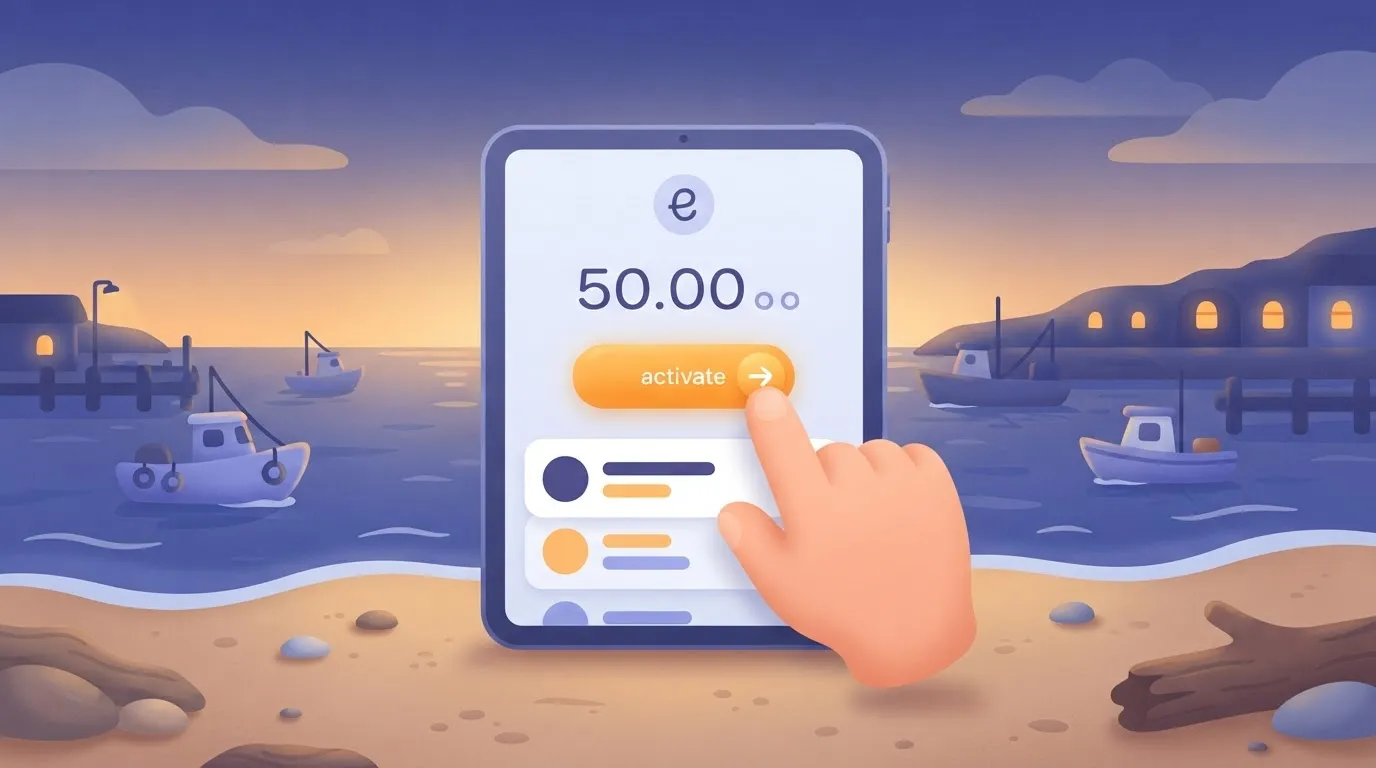
You fund a dedicated wallet with USDC so your agent can pay for each request as it goes, rather than committing to a subscription.
This ensures your agent has enough liquidity to handle initial bursts of high-volume requests without hitting a zero balance.
This deposit is held in USDC on the Base blockchain, with Brave covering gas fees for transacting on Base for a limited time.
While Base is the current network, Brave plans to expand support to other networks and stablecoins to reduce friction for you if you hold assets on different chains.
Per-query pricing for Pro and AI tiers
The x402 standard uses a granular pricing model where your agent is charged per request for precise cost tracking across different search types.
This transparency ensures that a high-reasoning model like Claude Opus 5.5 can justify its compute spend by only paying for the specific data points it needs to solve a complex coding task.

| Search Type | Price per Request | Price per 1,000 |
|---|---|---|
| LLM Context | $0.005 | $5.00 |
| Web Search | $0.005 | $5.00 |
| News | $0.005 | $5.00 |
| Image | $0.005 | $5.00 |
| Local | $0.005 | $5.00 |
These rates apply across all search categories. A research agent using Gemini Deep Research Max can switch between image and news queries without needing to manage separate budget pools or rate limits for different media types.
Technical prerequisites for agent developers
Integrating x402 requires your agent to handle a specific 402 Payment Required HTTP status code. This is a signal that the current request lacks the necessary payment headers.
When this error occurs, your agent must generate a new payment proof from its wallet and retry the request with the updated headers.
For a high-frequency model like GPT-6 Luna, this retry logic must be optimized to prevent latency spikes that could stall a real-time user interaction.
You must also implement a monitoring system to track the wallet's USDC balance, as failing to replenish funds will result in immediate service suspension for your agent.
Easier to see it running than to read about it: set it up free, no card.
Common failure modes in autonomous agent payment logic
Manual oversight of agent wallets creates a bottleneck where a single oversight in balance monitoring leads to total system failure.
When your agent receives a 402 Payment Required response, it signs a USDC payment for the stated amount and automatically retries the request, so no manual re-authorization is required.
Wallet drain from recursive AI agent loops
Agents lack the innate financial intuition to stop spending when a task enters a logical loop, leading to the immediate depletion of all available wallet funds.
In a recursive scenario, such as you tasking Gemini 4 Carbon with a complex debugging cycle, the agent may repeatedly call external APIs to verify code changes, incurring a cost for every attempt.
Without a hard spending limit defined in the x402 header, the agent will continue these calls until the linked USDC balance is zero. This effectively locks out all other agents sharing that specific funding source.

Failure to handle 402 errors in agent reasoning
Most current agentic frameworks don't include standardized logic for the HTTP 402 Payment Required status code. This results in your agent treating a lack of funds as a generic network error.
When a high-reasoning model like GPT-6 Astra encounters a 402 error, it may attempt to resolve the problem by retrying the request or rewriting the prompt, rather than pausing to request a balance top-up.
This mismanagement of the error state forces your agent into a loop of failed executions that consumes compute cycles without producing any useful output.
Private key and x402 header security risks
Storing sensitive authorization data within your agent’s prompt context or environment variables exposes the wallet to theft via prompt injection.
If an attacker manages to leak the headers used by a high-volume model like Claude Haiku 5.5, they can divert your agent's micro-transaction stream to their own accounts.
Exposed API keys allow unauthorized third parties to drain the associated credit balance. Hardcoded private keys in agent scripts enable an attacker to sign transactions on your behalf.
Unencrypted header logs provide a roadmap for session hijacking in shared compute environments.
These vulnerabilities turn a functional agent into a financial liability, as the cost of a compromised key often exceeds the value of the work the agent was intended to perform.
How to implement x402 in current AI workflows
Implementing x402 involves transitioning from static authorization headers to dynamic, 402-driven payment handshakes within your automation logic.
This shift ensures that your agent only consumes resources it can immediately fund, preventing the common "runaway bill" scenario where a looped script drains a monthly credit limit in minutes.
Method 1: Using HTTP request steps for direct API calls
Direct HTTP requests are the most granular way to handle x402. They allow your agent to intercept the 402 Payment Required status code and initiate a transaction before retrying the call.
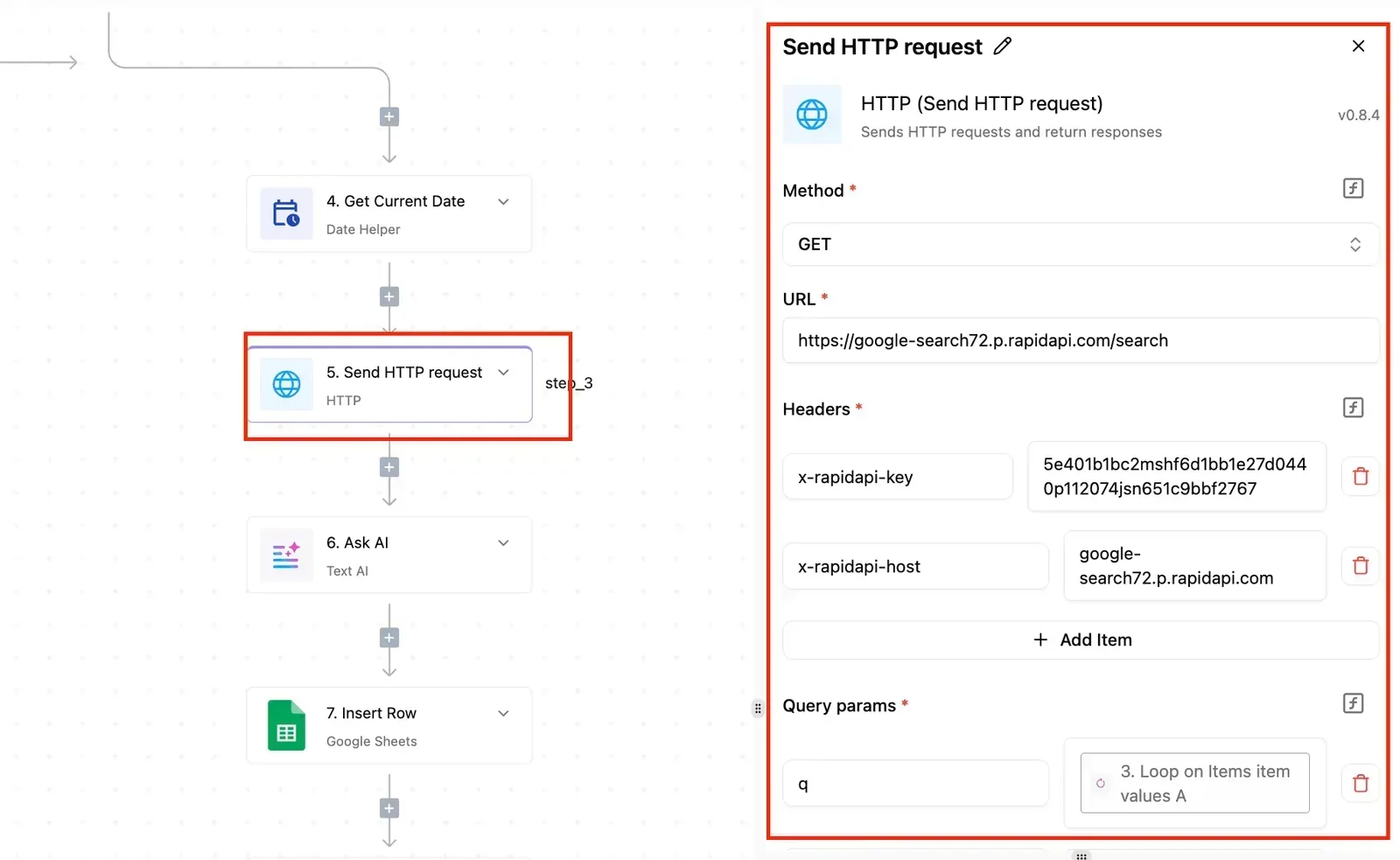
In a standard workflow, your agent sends a request, receives the 402 error containing the payment manifest, and calls a local wallet service to sign the transaction.
This method gives you total control over the retry logic, including hard limits on how many times an agent attempts to pay for a single failing step.
Method 2: Configuring OpenAI-compatible custom providers
Custom providers are a proxy layer that abstracts the payment logic away from the core agent prompts. By pointing a model like GPT-6 Astra toward a custom base URL instead of the default endpoint, the proxy handles the x402 handshake automatically.

This approach can be used to upgrade existing enterprise bots. It requires zero changes to the underlying prompt engineering or tool definitions.
The following table compares the primary implementation paths based on how quickly you can deploy them and how much ongoing maintenance they require.
| Method | Setup Speed | Flexibility | Maintenance Overhead |
|---|---|---|---|
| HTTP Steps | Slow | High | High |
| Custom Providers | Fast | Medium | Low |
| MCP Servers | Medium | High | Medium |
Choosing the right method depends on whether your priority is immediate deployment or long-term granular control over specific API costs.
Method 3: Leveraging Model Context Protocol (MCP) servers
The Model Context Protocol (MCP) allows you to build dedicated servers that expose x402-enabled tools directly to reasoning models. When using a high-reasoning model like Claude Fable 5.2 for long-horizon tasks, the MCP server is a secure fiscal gateway.
The model sees the "Pay" action as just another tool in its kit. This allows it to autonomously decide when a specific data resource is worth the quoted micro-transaction cost.
What Activepieces does about this
The platform manages the security of these transactions by isolating the signing logic from the agent's prompt context. Instead of exposing private keys to a model that could be compromised by prompt injection, Activepieces handles the cryptographic handshake within its secure environment.
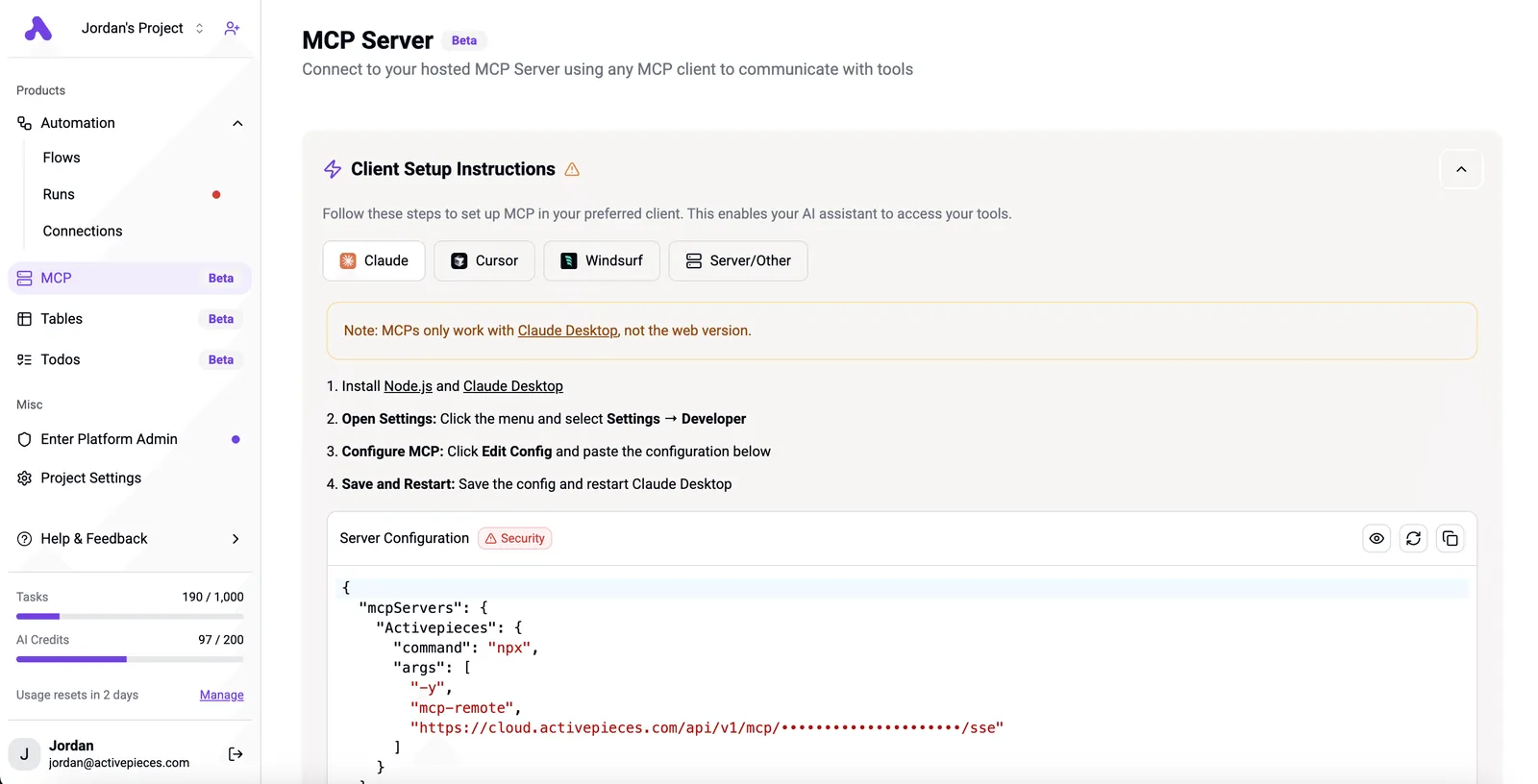
This separation of concerns is a core reason why organizations like Cisco utilize the platform to maintain control over automated tool calls.
This eliminates the "split-brain" billing problem by giving you a single dashboard to audit both the reasoning costs and the resource acquisition costs.
Under its MIT License, the software allows you to self-host this fiscal gateway, keeping your transaction metadata and wallet interactions entirely within your own infrastructure.
This visibility is critical for scaling agentic fleets where hundreds of micro-payments occur every minute.
Frequently asked questions about x402 and AI payments
Which currencies does x402 support?
The x402 standard uses USDC on the Base network to ensure that every micro-transaction settles instantly with a stable value. Using a stablecoin means you can predict your API overhead without worrying about the hourly price swings typical of unpegged digital assets.
By sticking to a single, liquid asset, the protocol avoids the complex exchange rate calculations that usually slow down automated header negotiations.
Can x402 be used with Google or Bing APIs?
You can use x402 with any provider that implements the header-based payment handshake. Standard search providers like Google or Bing currently require traditional API keys and monthly billing cycles.
An agent using Claude Opus 5.5 to synthesize search results must still rely on a pre-funded developer account for the search portion. This holds whether or not it also pays for its reasoning steps via x402.
For a support lead, this mix of payment types is a liability. It creates a "split-brain" billing scenario where your agent has funds to think but fails because a separate credit card on a search dashboard expired.
What happens if an agent runs out of credits mid-task?
When a wallet balance hits zero, the resource provider returns a 402 Payment Required status code. This signals your agent to pause or request a top-up.
In a production environment using Gemini 4 Carbon for complex cybersecurity audits, a mid-task failure without a fallback means your agent drops the current state. This potentially wastes the compute already spent on the initial reasoning.
The following table illustrates the specific costs your agent encounters when calling different x402-enabled endpoints, showing how a reasoning model must budget for varying levels of task intensity.
| Endpoint | Cost (USDC) |
|---|---|
| Chat-mini | — |
| Chat | — |
| LLM Context | $0.005 |
The predictability of these costs allows a model like GPT-6 Astra to calculate exactly how many steps it can afford before a task becomes unprofitable.
Is x402 a blockchain-based protocol?
While x402 uses the Base blockchain to settle the actual movement of funds, the protocol itself is a set of HTTP header standards designed for the open web.
It treats the blockchain as a transparent, programmable ledger so that an autonomous agent can verify a payment was sent without needing you to log into a banking portal.
This trustless interaction means a provider delivers data only after the ledger confirms the transaction. This removes the need for the manual credit applications that usually delay new integrations by weeks.